
Morocco Photography Tours: Best Places, Seasons & Tips
Morocco is a remarkably diverse destination for photographers. Within a single trip, you can photograph colorful medinas, ancient kasbahs, dramatic mountain landscapes, Atlantic beaches, desert dunes, traditional markets, and centuries-old architecture. The changing light, textures, colors, and contrasts make the country particularly rewarding for travelers who want to return home with more than standard vacation snapshots.
The best Morocco photography tours are not simply about visiting as many places as possible. They are about allowing enough time to find good light, explore locations on foot, photograph local life respectfully, and reach landscapes at the right time of day. A well-planned itinerary can combine Marrakech, the Atlas Mountains, Ait Ben Haddou, the Sahara Desert, Fes, Chefchaouen, and Morocco’s Atlantic coast without turning the trip into a constant race between destinations.
This guide explains where to photograph in Morocco, when to go, what equipment to bring, how to photograph people and culture respectfully, and how to choose an itinerary that matches your photography interests.
Why Morocco Is a Great Destination for Photography
One of Morocco’s biggest advantages for photographers is its variety.
The landscape changes dramatically as you travel. Around Marrakech, you can photograph colorful souks, historic buildings, palm-filled landscapes, and the nearby Atlas Mountains. Further south, the scenery becomes increasingly arid, with kasbahs, valleys, rocky plateaus, and desert landscapes. In the north, cities such as Fes and Chefchaouen offer different architectural styles, while Essaouira provides an Atlantic setting with fishing boats, sea walls, and blue-and-white buildings.
Morocco is also visually interesting at a smaller scale. Doorways, handmade tiles, woven textiles, pottery, spices, wooden details, metalwork, and traditional architecture provide plenty of subjects for close-up and detail photography.
For photographers, this means you don’t necessarily need to spend every day visiting famous monuments. Simply walking through a medina or stopping at a mountain village can produce memorable images.
Best Places for Photography in Morocco
Marrakech: Street Photography, Architecture and Color
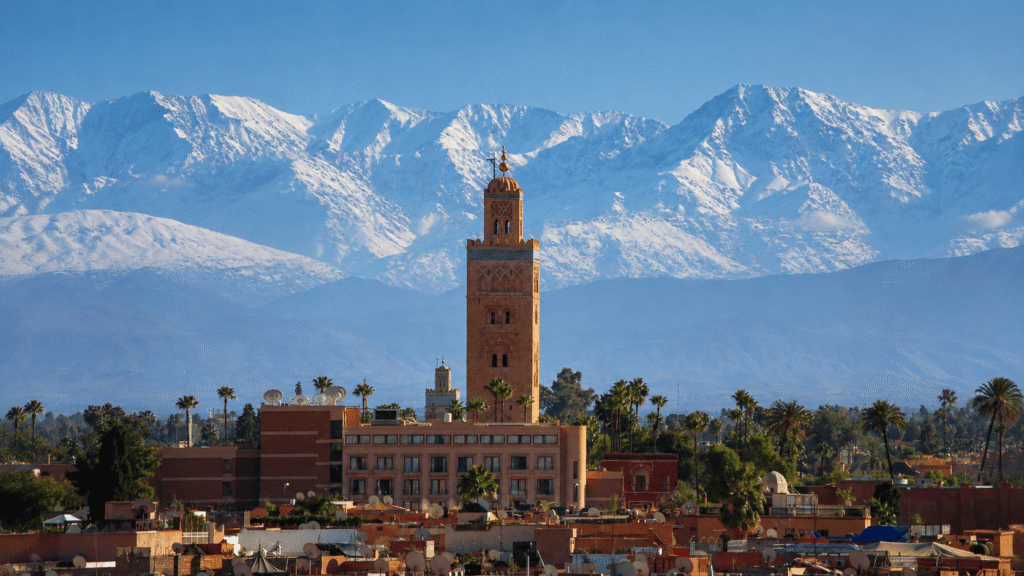
Marrakech is one of the easiest places to begin a photography-focused trip.
The medina offers a huge variety of subjects, including narrow streets, traditional riads, artisan workshops, market stalls, architectural details, and colorful products. Early morning is particularly useful for photography because the streets are generally quieter and the light is softer.
Jemaa el-Fna becomes especially atmospheric toward sunset, when the square changes character and food stalls begin preparing for the evening. For architecture, look for details rather than photographing only the most famous landmarks. Doorways, tilework, carved wood, shadows, and courtyards can create stronger compositions.
If you want to combine Marrakech with mountain scenery, a day trip to Ourika Valley from Marrakech offers opportunities to photograph Atlas Mountain landscapes, Berber villages, waterfalls, river scenery, and panoramic viewpoints. The itinerary also includes stops around Setti Fatma and an argan oil cooperative.
Chefchaouen: Blue Streets and Mountain Views
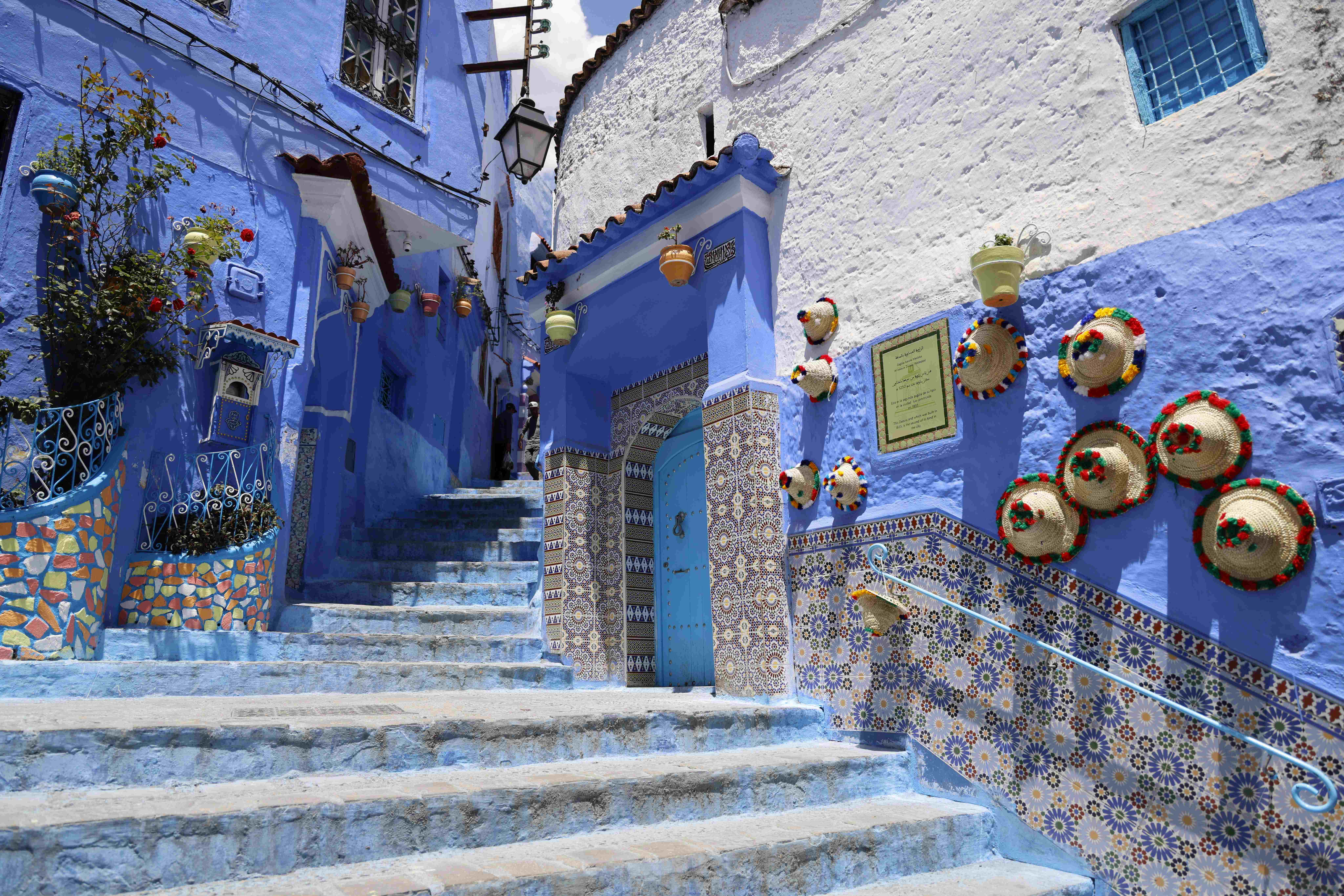
Chefchaouen is famous for its blue-painted medina, but photographers should look beyond simply photographing blue walls.
The narrow streets create layers of color, shadows, doorways, stairs, and changing perspectives. Walking early in the morning can help you avoid the busiest periods and find cleaner compositions.
The surrounding Rif Mountains also provide opportunities for wider landscape photographs. For travelers staying in Fes, a day trip from Fes to Chefchaouen allows you to explore the blue medina and surrounding mountain scenery in one day.
Fes: Medina, Craftsmanship and Everyday Life
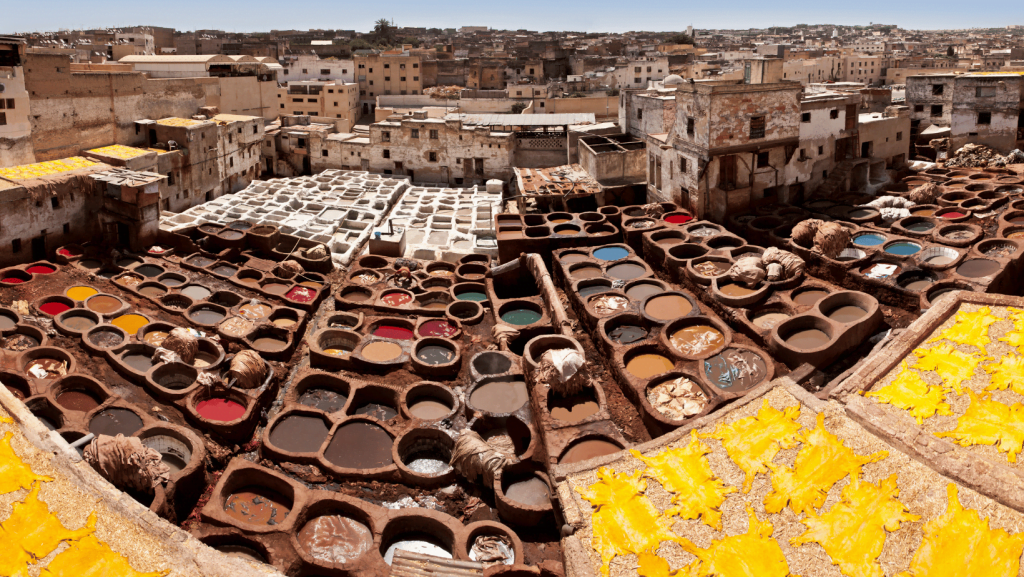
Fes is particularly interesting for photographers who enjoy architecture, street scenes, craftsmanship, and documentary-style photography.
Fes el Bali is a maze of narrow streets filled with workshops, markets, historic buildings, and traditional crafts. The famous tanneries are one possible photographic subject, but the surrounding streets often offer equally interesting opportunities.
Instead of photographing only major attractions, pay attention to repetition and texture: patterned tiles, carved doors, woven fabrics, old walls, and artisans working with traditional materials.
Because the medina is dense and often busy, a smaller camera or versatile zoom lens can be easier to handle than a large professional setup.
Ait Ben Haddou and Ouarzazate: Kasbahs and Cinematic Landscapes
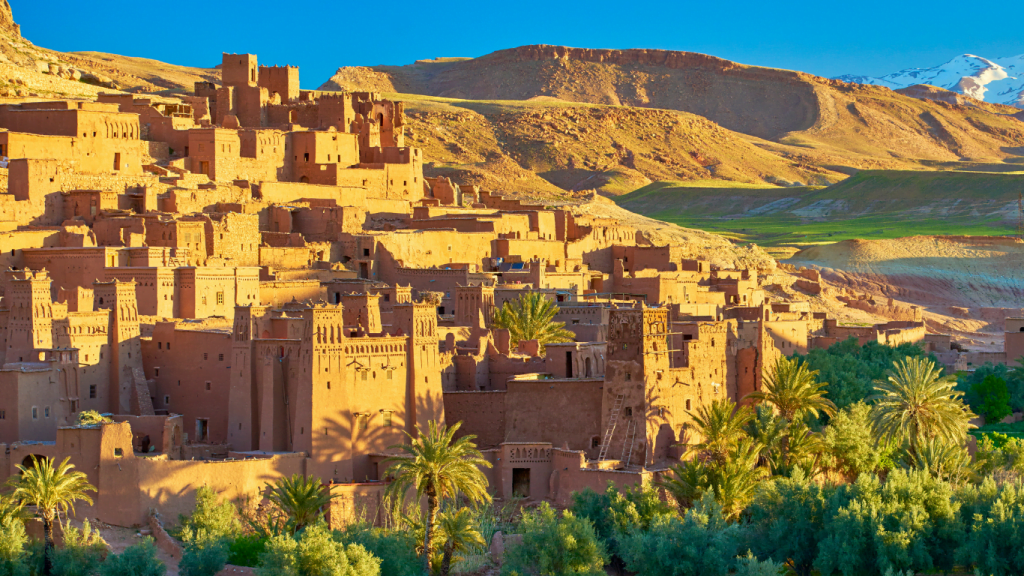
The area around Ouarzazate is ideal for photographers interested in architecture, desert landscapes, and cinematic scenery.
Ait Ben Haddou is particularly photogenic because its earthen architecture changes dramatically depending on the direction and intensity of the light. Photographing the kasbah during the warmer light of morning or late afternoon can reveal much more texture than shooting in the middle of the day.
The region can also be combined with the Sahara on a multi-day itinerary. For example, the 4 Days Desert Tour from Marrakech travels through the High Atlas Mountains and Ait Ben Haddou before continuing toward Ouarzazate, Dades Valley, Todra Gorges, and the Merzouga desert.
Merzouga and the Sahara Desert: Dunes, Light and Stars
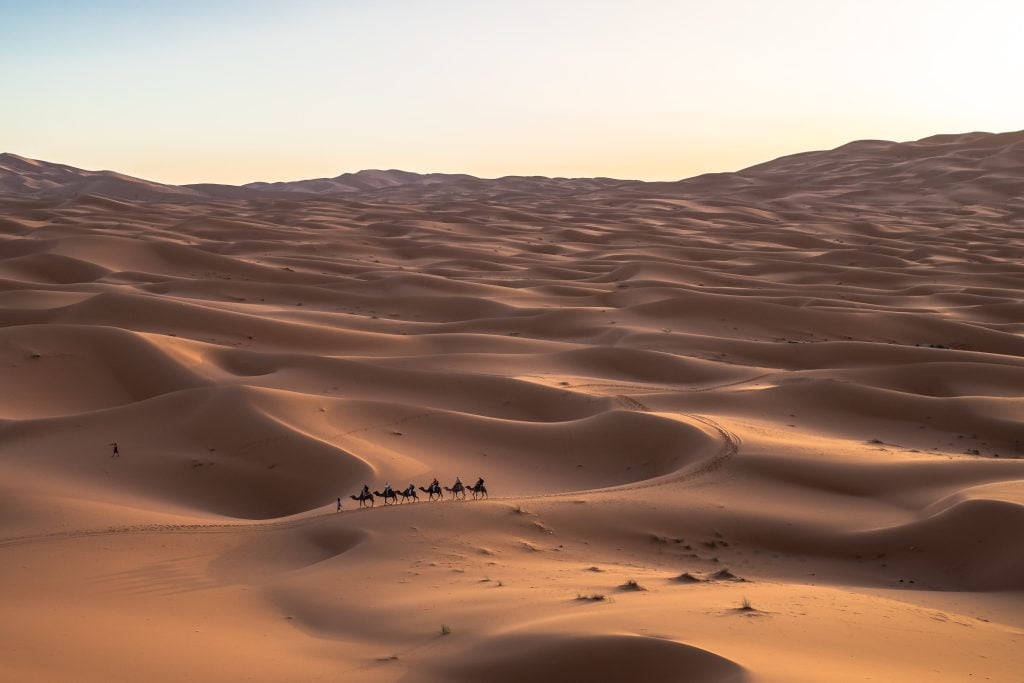
For many photographers, the Sahara is the visual highlight of a Morocco trip.
The Erg Chebbi dunes near Merzouga offer large-scale compositions with sweeping lines, changing shadows, and strong contrasts. Sunrise and sunset are the key periods. As the sun moves lower, the shapes of the dunes become more pronounced and the color of the sand changes.
Don’t limit your desert photography to wide landscape shots. Look for footprints, camel silhouettes, textures in the sand, and patterns created by wind.
Night photography is another reason to spend at least one night in the desert. Away from major urban areas, the darker surroundings can provide opportunities for photographing the night sky when weather and conditions cooperate.
A 3 Days Desert Tour from Fes is another option for photographers starting in Fes. The route passes through Ifrane, Azrou and the Middle Atlas before reaching Merzouga, with a camel ride, desert sunset, sunrise, and overnight camp included in the itinerary.
Essaouira: Coastal and Documentary Photography
Essaouira offers a completely different photographic environment.
The Atlantic coastline, fishing harbor, historic medina, fortified walls, boats, markets, and blue-and-white architecture create plenty of variety. The city’s atmosphere also makes it useful for photographers interested in documentary and lifestyle images.
Morning can be a good time for the harbor, while late afternoon creates longer shadows around the medina and city walls.
If you’re already based in Marrakech, an Essaouira day trip can be an efficient way to add coastal photography to an itinerary without changing hotels.
Atlas Mountains: Landscapes and Rural Life
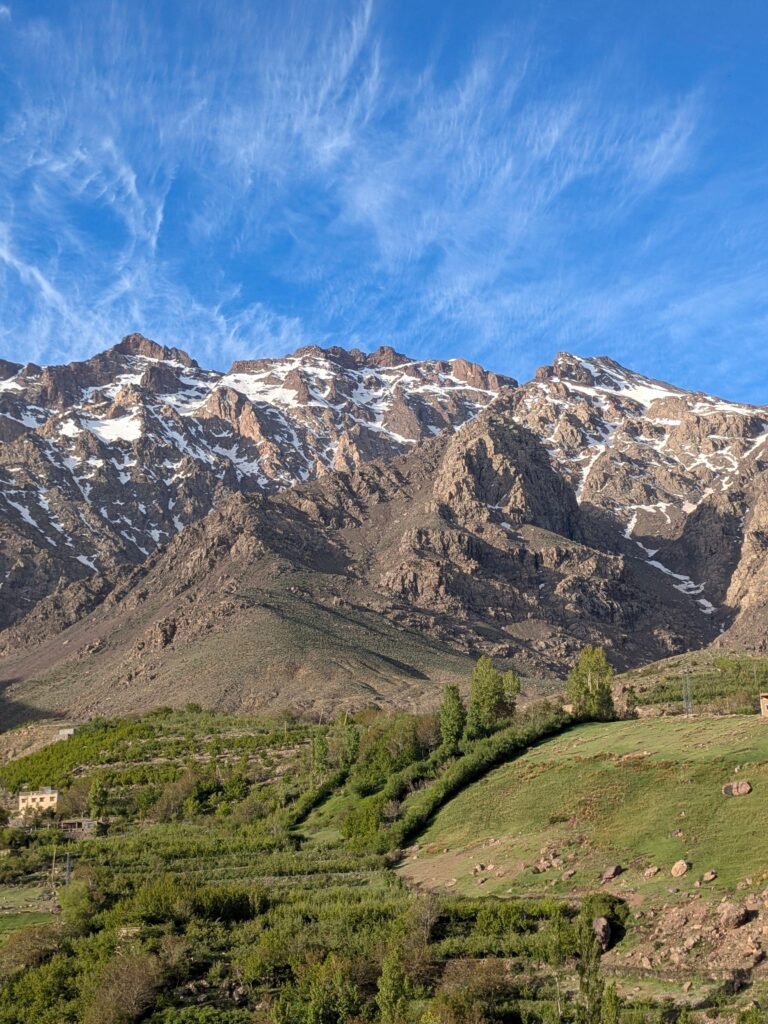
The Atlas Mountains provide opportunities for landscape photography, particularly around valleys, mountain passes, villages, rivers, and agricultural areas.
The scenery changes considerably with altitude and season. In some areas, terraced fields and villages create layered compositions, while higher elevations provide broader mountain views.
For landscape photography, don’t rush through mountain roads. The best photograph may come from an unplanned roadside viewpoint rather than a famous attraction.
Best Seasons for Morocco Photography
There is no single best month for every type of photography. Your ideal season depends on the places you want to visit and the subjects you want to photograph.
Spring: March to May
Spring is one of the most attractive periods for a photography trip. Temperatures are generally more comfortable than during the hottest part of summer, and landscapes can appear greener in many regions.
This is particularly useful if your itinerary combines cities, mountains, and outdoor photography.
Summer: June to August
Summer can be very hot, particularly in Marrakech and the desert. That doesn’t make photography impossible, but it changes how you should plan your days.
Schedule outdoor shoots for early morning and late afternoon, and avoid spending long periods under the strongest midday sun.
If you’re photographing the Sahara, heat management becomes particularly important. Carry sufficient water and protect your camera equipment from dust and sand.
Autumn: September to November
Autumn can be a comfortable period for combining different regions of Morocco. As temperatures become more manageable after summer, photographers can spend more time walking through medinas and exploring outdoor landscapes.
September can still be hot in some areas, so conditions vary depending on your route.
Winter: December to February
Winter provides different opportunities. The Atlas Mountains can have snow at higher elevations, creating a striking contrast with Morocco’s warmer southern landscapes.
Days can be pleasant in many parts of the country, although mornings and evenings may be cold, particularly in mountain and desert regions.
If your priority is landscape variety, winter can produce photographs that look very different from the typical warm-weather images of Morocco.
The Best Time of Day for Photography
Regardless of the season, light is often more important than the calendar.
Golden Hour
The period shortly after sunrise and before sunset creates softer light, longer shadows, and warmer tones. These conditions are particularly useful for desert dunes, kasbahs, mountains, and architecture.
Blue Hour
The short period before sunrise or after sunset can work particularly well in cities. Buildings and streets retain some ambient light while the sky becomes deeper in color.
Midday
Strong midday sunlight can create harsh shadows, but it isn’t useless. Look for architectural patterns, narrow streets, shaded doorways, or high-contrast compositions rather than trying to photograph everything in open sunlight.
What Type of Photography Can You Do in Morocco?
Morocco works for several photography styles.
Landscape photography: The Atlas Mountains, Sahara, valleys, gorges, and Atlantic coast offer very different landscapes.
Street photography: Marrakech and Fes are particularly rich environments for documenting movement, architecture, markets, and everyday scenes.
Architecture photography: Medinas, kasbahs, mosques, gates, riads, and traditional buildings provide strong geometric and decorative elements.
Portrait photography: Morocco’s diverse communities can offer compelling portrait subjects, but photographing people should always be approached respectfully.
Food photography: Tagines, couscous, pastries, spices, mint tea, and market displays can add a strong sense of place to a travel photography collection.
Night photography: The Sahara and some historic city environments can provide interesting opportunities after dark.
Photography Etiquette in Morocco
A good photograph should never come at the expense of someone’s privacy or comfort.
If you want to make a recognizable portrait of someone, ask permission first. A smile, gesture, or simple question can make the interaction much more respectful.
Be especially careful around children. Avoid photographing children without permission from a parent or responsible adult.
In busy markets, don’t block shop entrances or interfere with people working. If you’re interested in photographing an artisan, spend some time observing before immediately raising your camera.
Also remember that cultural and religious sites may have specific photography rules. Follow signs and instructions from local staff or guides.
What Camera Equipment Should You Bring?
You don’t need an expensive professional camera to photograph Morocco well.
A lightweight mirrorless or DSLR camera with a versatile zoom lens can cover many situations. A smartphone can also produce excellent travel photographs, especially in good natural light.
Useful equipment includes:
- A versatile zoom lens for landscapes, architecture, and street scenes
- A wide-angle lens for interiors and large landscapes
- A spare battery or power bank
- Extra memory cards
- A lightweight tripod if you plan to shoot at night
- A protective camera bag
- A lens cloth and basic cleaning supplies
- Dust protection when visiting the desert
In the Sahara, keep your equipment protected when moving through sandy areas. Avoid changing lenses unnecessarily when there is strong wind or blowing sand.
How Long Should a Morocco Photography Trip Be?
The ideal duration depends on how many regions you want to photograph.
For 3–4 days, concentrate on Marrakech and one nearby region. This works well for travelers who want a short photography-focused experience.
With 5–7 days, you can combine Marrakech, the Atlas Mountains, Ait Ben Haddou and the Sahara, although the itinerary will involve substantial driving.
With 7–10 days, you can slow down and add destinations such as Fes or Essaouira.
For a more comprehensive photography trip, 10–14 days gives you considerably more flexibility. You can combine Marrakech, the Atlas Mountains, southern Morocco, the Sahara, Fes, Chefchaouen and the Atlantic coast without dedicating every day to transportation.
A longer itinerary also gives photographers something important: time to return to a location when the light or weather is better.
How to Choose the Right Morocco Photography Tour
Not every photography-focused traveler needs the same itinerary.
Before booking, consider the following:
Choose Destinations Based on Your Photography Style
If you mainly photograph landscapes, prioritize the Atlas Mountains, Sahara, valleys, and coastal areas.
If you prefer street photography, spend more time in Marrakech and Fes.
If architecture is your main interest, include historic medinas, kasbahs, gates, riads, and traditional villages.
Don’t Pack Too Many Destinations Into a Short Trip
Morocco looks compact on a map, but road travel can take several hours between major destinations. A tour that includes too many stops may leave little time for actual photography.
A slower itinerary can produce better photographs than a longer list of destinations.
Ask About Flexible Stops
Photographers often need more time than ordinary sightseeing groups. Ask whether the itinerary allows time for viewpoints, changing light, sunrise sessions, or spontaneous photography stops.
Private or customized travel can be particularly useful if photography is the main purpose of your trip.
Practical Tips for Better Travel Photos
Wake up early. Some of the best light and quietest streets appear before the main crowds arrive.
Carry less equipment. You are more likely to explore if your camera bag is comfortable.
Look for details. Morocco’s visual character is often found in doors, tiles, textiles, walls, hands, food, and small architectural elements.
Photograph in layers. Include foreground, middle ground, and background when shooting landscapes or streets to create depth.
Stay longer in one location. Spend 30 minutes observing instead of taking five minutes of quick snapshots.
Back up your photographs. If you’re carrying important images, copy them to a laptop, cloud service, or external drive during the trip.
Protect your gear from dust. This is especially important in desert environments.
Leave room for spontaneous moments. Some of the most memorable photographs happen between planned stops.
FAQ About Morocco Photography Tours
What is the best place for photography in Morocco?
There isn’t one location that suits every photographer. Marrakech is excellent for street scenes and architecture, Chefchaouen for colorful urban photography, the Atlas Mountains for landscapes, and Merzouga for desert photography.
What is the best time of year for photography in Morocco?
Spring and autumn are generally comfortable seasons for traveling through several regions, while winter can provide snow in the Atlas Mountains and summer offers strong desert and architectural light. Your preferred destinations and tolerance for heat should determine the timing.
Can beginners join a Morocco photography tour?
Yes. A photography-focused itinerary can work for beginners as well as experienced photographers. You don’t need advanced equipment; understanding light, composition, timing, and respectful photography practices is more important.
Can I photograph people in Morocco?
Yes, but ask permission before taking recognizable portraits. Respect people’s privacy, especially children, workers, and people in religious or sensitive settings.
Is the Sahara good for photography?
Yes. The Sahara offers opportunities for sunrise and sunset landscapes, dune patterns, silhouettes, camel photography, and night-sky images. Protecting camera equipment from sand and dust is especially important.
How many days do I need for a photography trip to Morocco?
A short trip of three to four days can focus on Marrakech and nearby landscapes. Seven to ten days allows you to combine several regions, while 10–14 days provides more flexibility for photographers who want to explore Morocco at a slower pace.
Morocco offers an unusually wide range of photography opportunities within one country. The medinas of Marrakech and Fes, the blue streets of Chefchaouen, the Atlas Mountains, ancient kasbahs, Atlantic coast, and Sahara dunes all provide very different subjects and visual styles.
The key is not simply finding the most famous locations. Plan around light, allow enough time to explore, protect your equipment, and approach people and local communities respectfully. A well-paced itinerary can turn a normal Morocco vacation into a genuinely rewarding photography journey.
If you’re planning your own Morocco photography tours, start by deciding what you most want to photograph—cities, landscapes, desert, architecture, or culture—and then build the route around those priorities. That approach will give you more time behind the camera and a much stronger collection of images to take home.