
Ouzoud Waterfalls in Morocco: Complete Guide for Visitors
Ouzoud Waterfalls in Morocco: Complete Guide for VisitorsOuzoud Waterfalls are one of Morocco’s most impressive natural attractions, where water drops in several tiers through a green canyon surrounded by olive trees and rocky cliffs. Located in Azilal Province in central Morocco, the falls are about 150–160 km from Marrakech and are a popular destination for travelers looking to experience a different side of the country beyond its imperial cities and desert landscapes.
The site is more than a viewpoint over a spectacular cascade. Visitors can walk down to the river, explore trails through olive groves, see Barbary macaques, take a small boat close to the falls, and, depending on conditions, swim in natural pools. This guide explains what to expect, how to get there, when to visit, and how to make the most of your time at Ouzoud.
Where Are the Ouzoud Waterfalls?
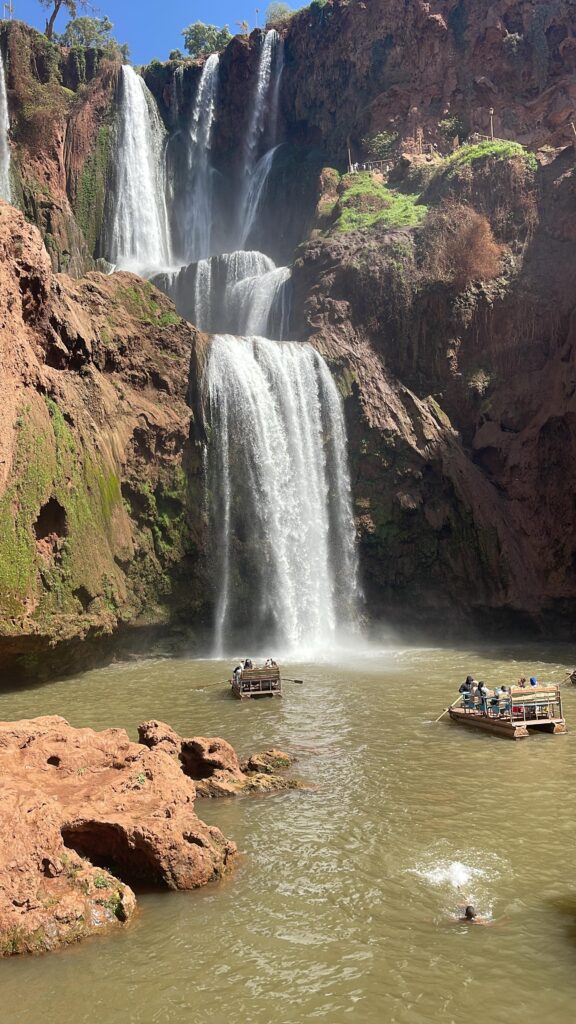
The Ouzoud Waterfalls are located near the village of Ouzoud in Azilal Province, on the northern side of the Central High Atlas region. The falls are part of the M’Goun UNESCO Global Geopark, an area known for its geological formations, valleys, gorges, traditional villages, and diverse landscapes.
The waterfalls are roughly 150–160 km from Marrakech, depending on the route and starting point. By road, the journey usually takes around two and a half to three hours in normal conditions, making Ouzoud suitable for a long day trip from Marrakech.
The name Ouzoud comes from the Amazigh word associated with olives, which reflects the landscape around the waterfalls. Olive trees are particularly noticeable along the paths leading down toward the river.
How High Are the Ouzoud Waterfalls?
The main cascade has a total drop of approximately 110 meters, making Ouzoud the highest waterfall system in Morocco and one of the highest in North Africa. The water descends through several tiers over limestone formations before reaching the pools and river below.
The geology is part of what makes the site interesting. According to the M’Goun UNESCO Global Geopark, the waterfalls are carved into Jurassic limestone, while travertine formations have developed around the area over time. The combination of rock, vegetation, water, and changing light gives the gorge its distinctive appearance.
From the upper viewpoints, you can see the full height of the falls. As you descend toward the river, the perspective changes considerably, allowing you to experience the waterfall from much closer to its base.
What Makes Ouzoud Waterfalls Special?
Ouzoud is not simply a waterfall viewed from a single observation point. The surrounding landscape creates a small natural environment that can easily fill several hours.
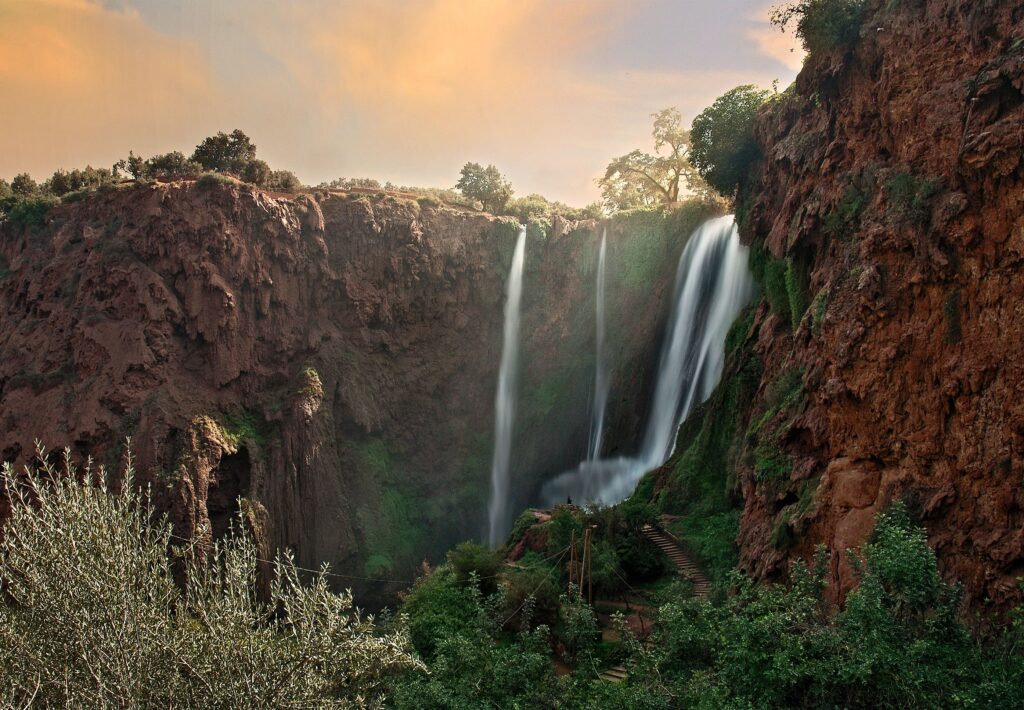
The most noticeable features include:
- The 110-meter cascade and its multiple levels
- Green valleys and olive groves
- Rocky cliffs and limestone formations
- Natural pools along the river
- Barbary macaques living around the gorge
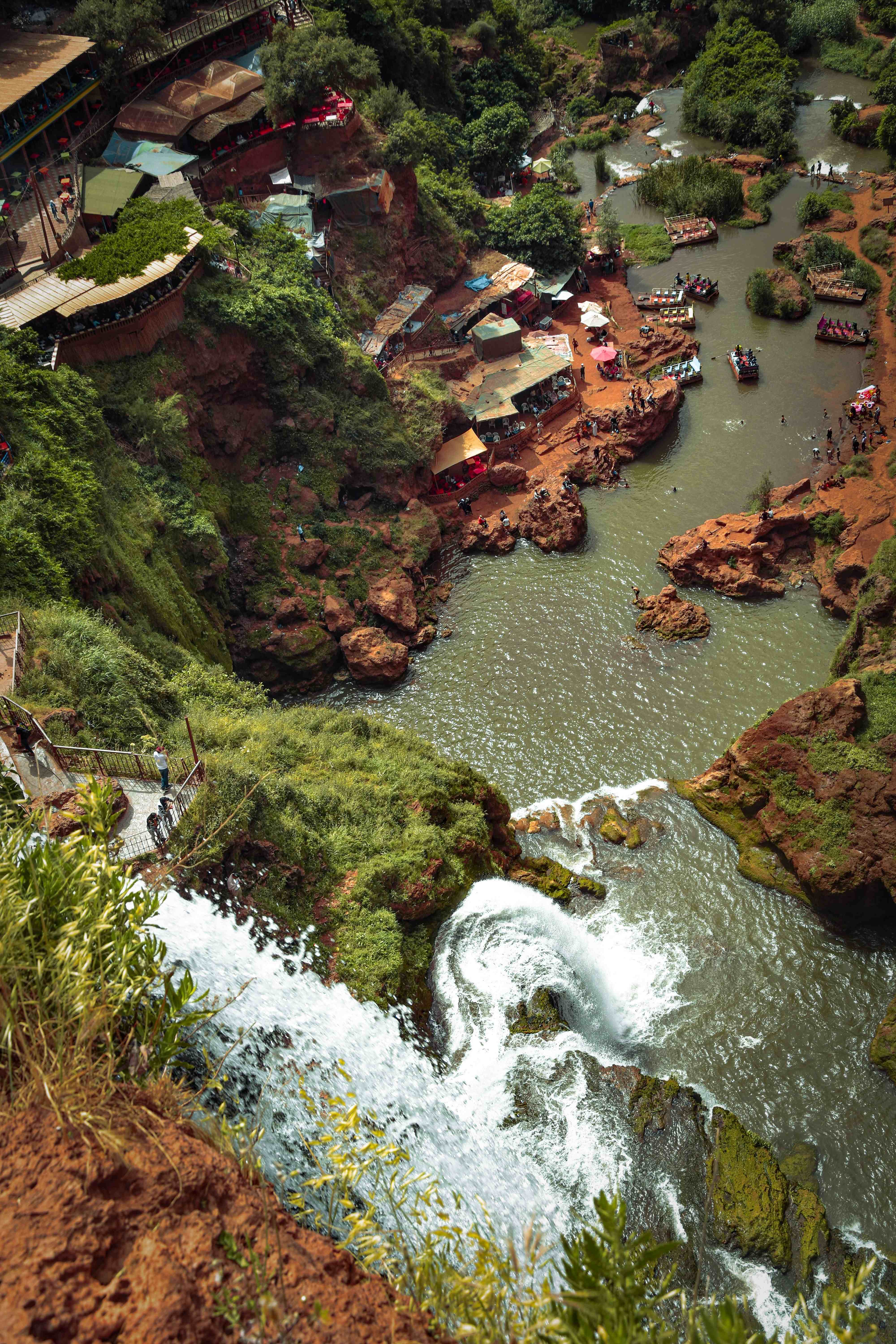
- Small local restaurants overlooking the water
- Walking trails connecting viewpoints and the lower river
- Traditional water mills and evidence of historic water use
The atmosphere also changes throughout the day. Morning visits can feel relatively calm, while the middle of the day tends to bring more visitors, particularly during weekends and popular travel periods.
Things to Do at Ouzoud Waterfalls
1. Walk Along the Main Viewpoints
Start at the upper part of the waterfalls and take some time to see the cascade from different angles before walking downhill.
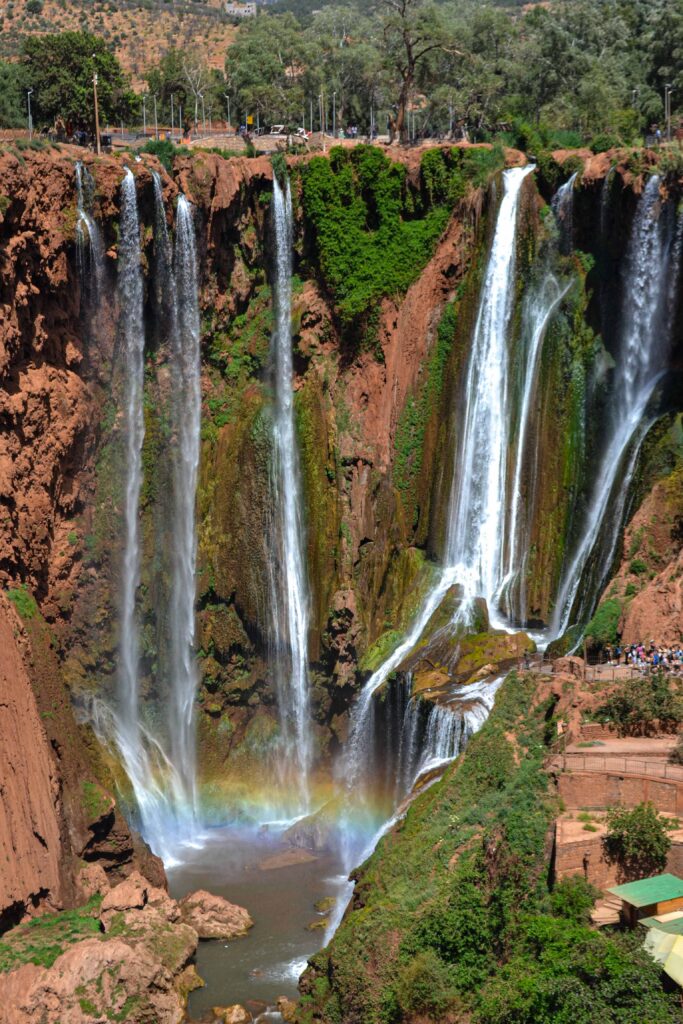
Several viewpoints provide wide views across the gorge. On sunny days, the spray can create rainbows around the waterfall, especially when the sunlight reaches the mist at the right angle.
Do not rush directly to the bottom. The viewpoints along the descent are some of the best places to appreciate the scale of the falls.
2. Hike Down to the Base
One of the most rewarding parts of visiting Ouzoud is walking from the upper viewpoints toward the river.
The path descends through olive trees and around small cafés and viewpoints. Some sections are relatively easy, while others can be uneven or slippery, particularly after rain or around wet areas.
Comfortable walking shoes are therefore more useful than ordinary sandals or flip-flops.
Once you reach the lower part of the gorge, the atmosphere changes. You are much closer to the water, and the sound of the falls becomes considerably stronger.
3. Take a Boat Ride
Small local boats operate near the pools below the waterfalls. A short ride can take visitors closer to the falling water and offers a different perspective from the viewpoints above.
Expect to get some spray, particularly when the boat approaches the main cascade.
Boat availability and conditions can vary, so check locally on the day rather than assuming a specific operating schedule.
4. Look for Barbary Macaques
One of the most distinctive features of Ouzoud is its population of Barbary macaques, a species native to Morocco and Algeria. The monkeys can often be seen around the olive trees and paths near the waterfalls.
They may appear comfortable around people, but they are still wild animals.
For a responsible visit:
- Do not feed the monkeys.
- Do not try to touch them.
- Keep food and bags secure.
- Give them enough space.
- Avoid surrounding a monkey to take a photograph.
Feeding wildlife can alter natural behavior and encourage animals to approach visitors more aggressively.
5. Swim in the Natural Pools
Swimming is possible in some of the natural pools around Ouzoud, particularly during warmer months when the water is more inviting. However, these are natural bodies of water rather than supervised swimming facilities.
Conditions can change with the season and water flow. The area closest to the main waterfall can have stronger currents, so visitors should avoid entering fast-moving water or swimming directly beneath the main drop.
If you plan to swim, bring:
- A swimsuit
- A towel
- Water shoes or footwear with good grip
- A dry change of clothes
- A waterproof bag for valuables
The rocks around waterfalls can be slippery, so extra caution is important.
How to Get to Ouzoud Waterfalls from Marrakech
For travelers staying in Marrakech, there are several ways to reach Ouzoud.
By Car
Driving gives you the greatest flexibility. The journey takes approximately two and a half to three hours, although the actual time depends on traffic, road conditions, stops, and your starting point.
A car also allows you to stop in smaller towns and rural areas along the way.
If you are driving yourself, avoid planning the return journey too tightly. The visit involves walking downhill and uphill, and it is easy to spend more time at the waterfalls than originally expected.
By Organized Excursion
An organized excursion can be convenient for travelers who do not want to navigate the roads themselves. Moroccan Trips currently offers a Day Trip to Ouzoud Waterfalls from Marrakech with transportation from Marrakech and time to explore the waterfalls.
For an informational visit, the important point is that a day trip normally means a long travel day: several hours are spent on the road, followed by several hours at the waterfalls before returning to Marrakech.
By Public Transport
Public transport is possible but generally requires more planning because Ouzoud is not served by a major railway station. Travelers commonly combine transport toward the Azilal/Ouzoud area with a taxi or other local connection.
For visitors with limited time, this can be less straightforward than driving or joining an organized excursion.
How Far Is Ouzoud from Marrakech?
Ouzoud Waterfalls are approximately 150–160 km from Marrakech. The journey normally takes around 2.5 to 3 hours each way, depending on traffic, road conditions, and stops.
This means a visit from Marrakech is best treated as a full-day outing rather than a quick excursion.
A typical day might involve:
Morning: Leave Marrakech and travel toward Ouzoud.
Late morning: Arrive, explore the viewpoints, and begin the descent.
Afternoon: Visit the lower pools, have lunch, walk around the river area, and return toward the upper village.
Late afternoon/evening: Travel back to Marrakech.
The exact schedule depends on the season, traffic, and how much time you want to spend hiking or swimming.
Best Time to Visit Ouzoud Waterfalls
There is no single perfect season for every traveler because the experience changes throughout the year.
Spring: March to May
Spring is often considered one of the most attractive periods because rainfall and mountain snowmelt can contribute to stronger water flow. The surrounding landscape is also greener, while temperatures are generally comfortable for walking.
If your priority is seeing the waterfalls with substantial flow and enjoying the surrounding landscape, spring is a strong choice.
Summer: June to August
Summer can be hot, but the cooler water makes swimming particularly appealing. The waterfalls continue to flow throughout the year, although the volume can be lower later in the dry season.
If visiting in summer, starting early can help you avoid the strongest midday heat and some of the busiest periods.
Autumn: September to November
Autumn generally brings more comfortable temperatures and can be a pleasant period for walking. Visitor numbers may also be lower than during the busiest summer periods.
Winter: December to February
Winter can be quieter and the waterfall can still have strong flow, but temperatures are cooler and wet paths may become slippery. Swimming is generally much less appealing during this period.
What Is the Best Time of Day to Visit?
If you have flexibility, arriving in the morning is a practical choice.
Early arrival can mean:
- Cooler temperatures for walking
- Better conditions for hiking down to the river
- Fewer visitors at some viewpoints
- More time to explore without rushing
- Good morning light for photography
That does not mean the waterfalls are unattractive later in the day. Light changes constantly around the gorge, and the spray can create impressive rainbows when the sun reaches the waterfall at the right angle.
How Long Do You Need at Ouzoud Waterfalls?
Plan for at least three to four hours at the waterfalls if you want to see the main viewpoints, walk down toward the river, have lunch, and spend some time around the pools. More time is useful if you want to swim, take a boat ride, or explore trails beyond the main viewpoints.
For travelers coming from Marrakech, this usually means dedicating most of the day to the excursion because of the driving time.
If you prefer slow travel, staying overnight near Ouzoud can also be considered. This allows you to explore early in the morning or later in the afternoon when the main day-trip crowds have decreased.
What Should You Bring?
A little preparation makes the visit much easier.
Essential items
- Comfortable walking shoes
- Reusable water bottle
- Sunscreen
- Hat or sunglasses
- Light layers depending on the season
- Swimsuit and towel if you plan to swim
- Small amount of Moroccan dirhams
- Phone or camera
- Waterproof bag for electronics
Cash is useful because small local businesses, cafés, parking areas, and activities may not accept cards.
Also keep your belongings secure around the monkeys. A curious macaque can move quickly when it sees food.
Ouzoud Waterfalls or Ourika Valley?
Travelers staying in Marrakech often compare Ouzoud with Ourika Valley, another popular nature destination in the Atlas region.
The two places offer different experiences.
Ouzoud is primarily known for its large waterfall system, river gorge, wildlife, and walking trails. Ourika is closer to Marrakech and is known for its valley landscapes, Berber villages, mountain scenery, riverside restaurants, and hiking around Setti Fatma.
If you are interested in comparing the two before deciding how to organize your Marrakech stay, you can read the [Day Trip to Ourika Valley from Marrakech] for more information about the valley, its villages, hiking, and waterfalls.
Neither destination needs to replace the other. Travelers with enough time can experience both and see two different landscapes around Marrakech.
Practical Tips for Visiting Ouzoud
A few simple decisions can make the day considerably easier.
Wear proper shoes. The paths around the waterfall include uneven and wet sections.
Start early. This is especially useful during summer and on busy weekends.
Carry water. The descent and later climb can be tiring, particularly in warm weather.
Keep some cash. Small cafés, parking areas, boat operators, and other local services may operate mainly with cash.
Protect your electronics. Spray from the waterfall can reach areas around the lower viewpoints.
Respect wildlife. Watch the macaques without feeding or touching them.
Do not underestimate the return climb. Walking downhill toward the river is easier than climbing back up, so allow enough time and take breaks.
Check conditions before swimming. Natural pools do not have the same safety controls as a maintained swimming pool.
Is Ouzoud Waterfalls Worth Visiting?
For travelers interested in nature, photography, hiking, and seeing a different side of Morocco, Ouzoud offers a very different experience from the country’s medinas and desert landscapes.
The combination of a 110-meter waterfall, olive-covered surroundings, limestone cliffs, river pools, walking trails, and Barbary macaques makes the area unusually varied for a single destination.
The main thing to remember is that Ouzoud is not a quick stop. From Marrakech, the distance means that you should dedicate most of a day to the experience. With an early start, comfortable shoes, enough water, and a little flexibility, you can explore the viewpoints, walk down to the river, enjoy the scenery, and experience one of Morocco’s most distinctive natural sites without rushing.
Frequently Asked Questions About Ouzoud Waterfalls
Ouzoud Waterfalls are approximately 150–160 km from Marrakech. The drive generally takes around 2.5 to 3 hours depending on traffic, road conditions, and stops.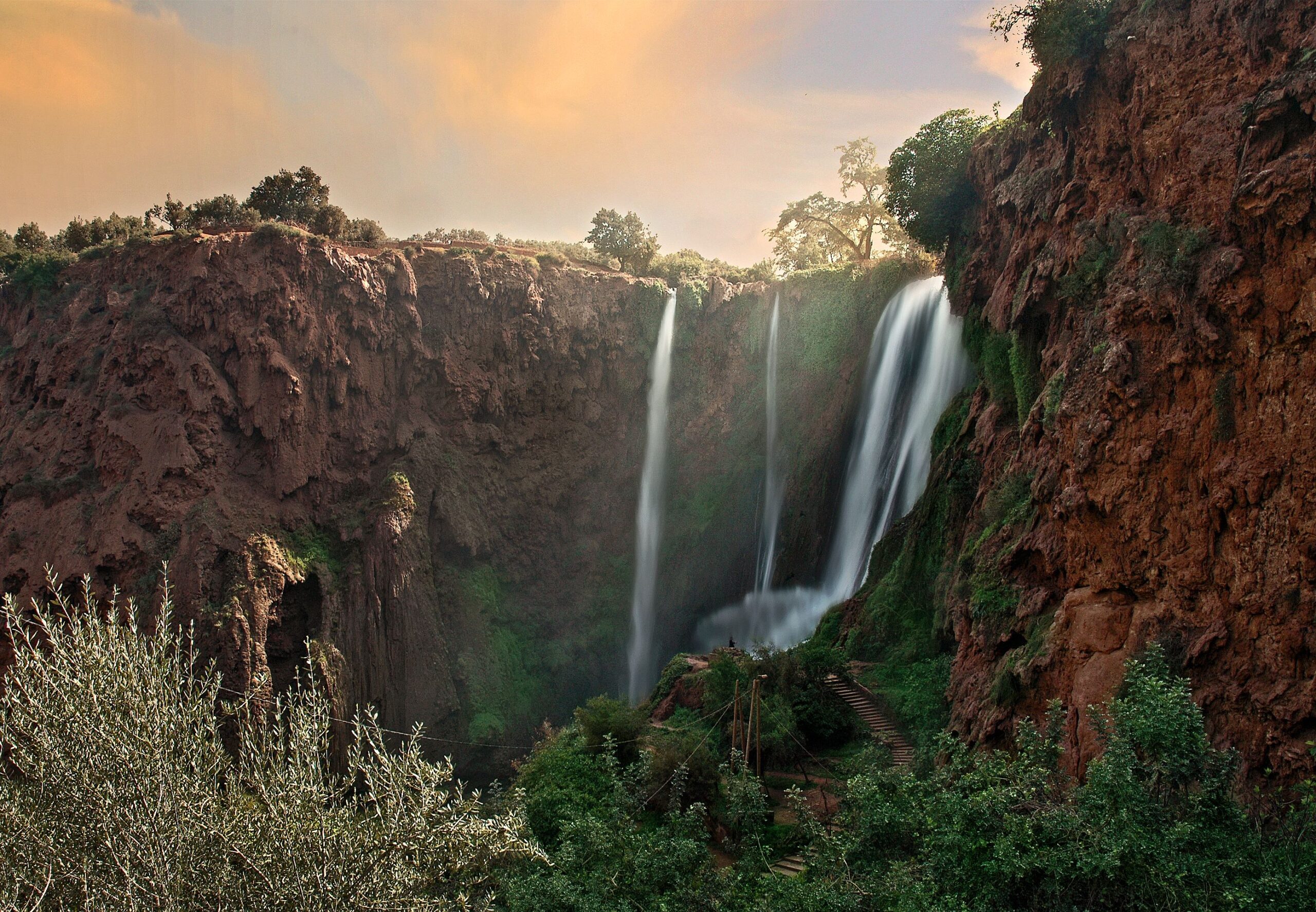
The waterfalls have a total drop of approximately 110 meters and descend through several tiers over limestone formations.
Swimming is possible in some natural pools around the waterfalls, particularly during warmer months. However, conditions are natural and there are no lifeguards, so avoid strong currents and areas immediately beneath the main cascade.
Yes. Barbary macaques live around the waterfall and olive groves. Visitors can often see them near the walking paths, but they should not be fed or touched.
Spring, particularly March through May, is a popular period because water flow can be stronger and the surrounding landscape is greener. Summer is better suited to travelers who are interested in swimming and warmer weather.
Ouzoud Waterfalls offer a chance to experience Morocco through water, mountains, wildlife, and rural landscapes rather than monuments and city streets. The 110-meter cascade is the main attraction, but the surrounding olive groves, river trails, natural pools, and Barbary macaques are what make a visit feel like a complete outdoor experience.
If you are staying in Marrakech, allow most of a day for the journey and exploration. Go prepared for walking, take your time around the viewpoints, respect the wildlife, and check the river conditions before swimming. Ouzoud is one of those Moroccan destinations where the landscape itself is the main experience.