
The Moroccan Caftan: History, Craftsmanship and Cultural Meaning
The Moroccan caftan is one of the country’s most recognizable traditional garments. With its flowing shape, fine fabrics and detailed decoration, it appears at weddings, religious holidays, family celebrations and important cultural events. However, its beauty represents much more than fashion. Every caftan carries the work of skilled artisans and reflects centuries of Moroccan history.
Understanding the Moroccan caftan offers a fascinating introduction to the country’s craftsmanship and social traditions. The garment has changed with every generation, yet it continues to connect families with their heritage. From the hands that create its braided trim to the ceremonies where it is worn, the caftan remains a powerful symbol of Moroccan identity.
Moroccan Caftan and Its Historical Origins
The wider caftan has appeared in different forms across several regions and historical periods. In Morocco, the garment developed its own construction, decoration and cultural meaning over many centuries.
Official Moroccan tourism material traces the traditional Moroccan caftan to the twelfth century during the Almohad dynasty. At that time, long garments made from valuable textiles were connected mainly with royal courts, political leaders and wealthy families.
As textile trade and urban craftsmanship developed, Moroccan artisans transformed the garment. New fabrics, embroidery methods and decorative details were introduced. Influences from Amazigh, Arab, Andalusian and Mediterranean culture gradually became part of its distinctive Moroccan identity.
The caftan eventually moved beyond palaces and elite homes. It became more widely worn at ceremonies and celebrations while remaining a sign of refinement and careful craftsmanship.
From Royal Garment to National Tradition
Early caftans were not available to every family. Fine silk, brocade and handmade decoration required time, skill and considerable expense. The most elaborate examples were therefore associated with the court and the wealthiest parts of society.
Over time, access to different textiles increased and styles became more varied. Families could order caftans suited to their budgets, local customs and personal preferences. The garment became an important part of wedding clothing and festive family life.
Today, the Moroccan caftan can be simple or highly luxurious. One version may use plain fabric with modest decoration, while another may require months of embroidery and beadwork. This variety helped the caftan become a shared national tradition rather than clothing limited to one social group.
What Does a Moroccan Caftan Look Like?
A Moroccan caftan is usually a long, loose garment with long sleeves and a front opening or decorative central line. It is often shaped gently at the waist and may be worn with a belt called a mdamma.
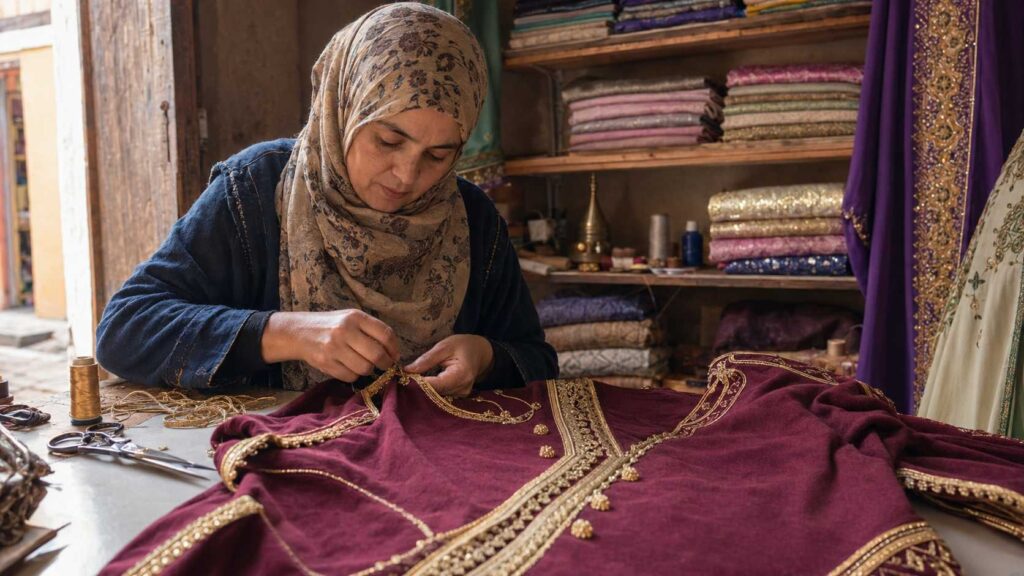
The front, neckline and sleeves are commonly decorated with braided trim known as sfifa. Small handmade decorative knots or buttons, called aakad, may run down the front. Embroidery, sequins, beads, crystals or metallic thread can add further detail.
Although the overall shape is recognizable, no two caftans need to look identical. The fabric, color, sleeve design, neckline and level of decoration can all change. These choices allow the wearer to respect tradition while expressing individual style.
Moroccan Caftan and Takchita: What Is the Difference?
The words caftan and takchita are sometimes used as though they mean the same thing, but there is an important difference in Moroccan clothing.
A traditional Moroccan caftan is generally a single-piece garment. A takchita normally combines two layers. The first, simpler layer is worn underneath, while the outer layer is more decorative and may remain partly open to reveal the garment below.
Both can be worn with an ornate belt. They may also use similar embroidery, sfifa and decorative buttons. Because their appearance can be closely related, visitors may not immediately recognize the difference.
The takchita is especially popular for weddings and formal celebrations. However, the word “caftan” is often used internationally as a broad name for Moroccan ceremonial fashion.
Choosing the Fabric
The creation of a Moroccan caftan begins with the fabric. Its weight, movement, color and texture influence every later decision.
Artisans and clients may choose from materials such as:
- Silk
- Velvet
- Brocade
- Satin
- Chiffon
- Organza
- Fine cotton or linen
Heavy velvet can create a rich winter caftan, while silk, chiffon or lighter fabrics may produce a softer shape. Brocade already contains woven designs and may require less additional decoration. A plain fabric provides more space for detailed embroidery or beadwork.
The fabric must also suit the occasion. A bride may choose a highly decorated material, while someone attending a smaller family event might prefer a simpler and lighter design.
The Work of the Maalem and the Tailor
Making a fine Moroccan caftan requires careful planning. A skilled tailor or maalem takes measurements, prepares the pattern, cuts the fabric and controls the garment’s overall construction.
Cutting is a critical stage because expensive fabric leaves little room for mistakes. The artisan must consider the direction of woven patterns, the placement of embroidery and the way the material will fall when worn.
The pieces are then joined and adjusted. Even though the caftan has a flowing form, a well-made example should sit neatly around the shoulders, sleeves and upper body. It must allow comfortable movement while preserving an elegant shape.
This work depends on knowledge developed through practice. Many artisans begin learning in family workshops or through apprenticeships, observing experienced makers before completing complex garments themselves.
Sfifa and Aakad: Signature Moroccan Details
Sfifa is one of the most recognizable features of the Moroccan caftan. It is a narrow decorative braid placed around the neckline, front opening, sleeve edges and sometimes the hem.
The color of the sfifa may match the fabric or create a deliberate contrast. Metallic gold or silver tones are common in formal designs, but modern caftans also use bright or subtle colors.
Aakad are small handmade knots or decorative buttons. They can be both practical and ornamental, forming a detailed line down the front of the garment. Making them evenly requires patience and precision.
Together, sfifa and aakad create the visual structure of the caftan. Even on a relatively simple garment, these details can make its Moroccan identity immediately recognizable.
Embroidery, Beadwork and Decoration
Decoration can transform a plain piece of fabric into an elaborate ceremonial garment. Moroccan caftans may feature hand embroidery, couching, sequins, pearls, crystals or carefully arranged beads.
Embroidery traditions vary between cities and regions. Fes is strongly associated with refined textile crafts and silk embroidery, while Rabat, Tetouan and other historic centers have their own decorative styles and techniques.
Some patterns use flowers and flowing lines. Others rely on symmetry and geometric forms. The artisan must balance the design so that the decoration follows the shape of the garment rather than making it appear overcrowded.
Highly detailed work can take weeks or months. Several specialists may contribute to one caftan, including the designer, tailor, embroiderer, braid maker and beadwork artisan. The finished garment is therefore the result of collaboration.
The Mdamma Belt and the Final Look
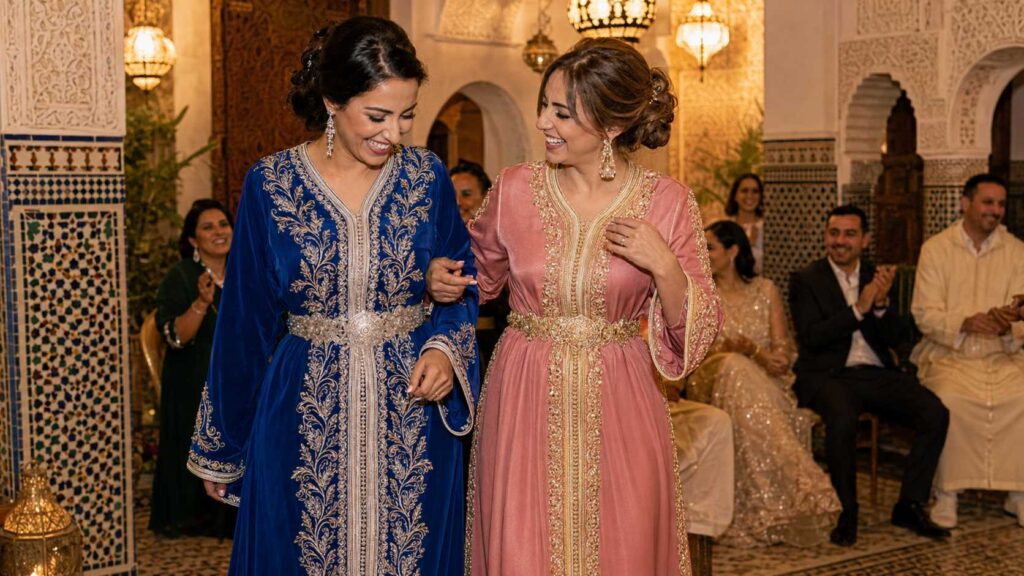
Many Moroccan caftans are completed with a belt known as a mdamma. It defines the waist and can turn a flowing garment into a more formal ceremonial outfit.
Traditional belts may be made from fabric and decorated to match the caftan. Other versions use metalwork, embroidery, stones or jeweled fastenings. The belt can be narrow and simple or wide and highly ornamental.
Choosing the right mdamma requires balance. An elaborate caftan may look best with a coordinated belt, while a simpler garment can be transformed by a more decorative one.
Jewelry, shoes and hairstyle also complete the appearance, especially at weddings. However, the caftan normally remains the central element of the outfit.
Regional Styles of the Moroccan Caftan
The Moroccan caftan does not belong to only one city. Different regions developed recognizable approaches to fabric, embroidery, color and shape.
Fes is famous for refined urban craftsmanship, valuable brocades and detailed embroidery. Northern cities such as Tetouan are associated with Andalusian influence and garments made with precious fabrics and gold or silver-colored threads.
Rabat has its own embroidery traditions, while designers in Casablanca and Marrakech often combine historical techniques with modern fashion. Other regions contribute local textiles, jewelry, colors and decorative preferences.
These differences make the caftan a reflection of Morocco’s regional diversity. A garment may communicate where it was made, which techniques were used and what artistic traditions inspired it.
The Moroccan Caftan at Weddings
Weddings are among the most important occasions for wearing a Moroccan caftan. The bride may change outfits several times during the celebration, presenting different colors, styles and regional traditions.
A bridal caftan or takchita is usually selected with great care. Fabric, embroidery, jewelry and belt are coordinated to create a complete ceremonial appearance. Some garments are newly made, while others may include family pieces or designs inspired by earlier generations.
Female guests also commonly wear caftans or takchitas. The celebration becomes a display of Moroccan textile art, with each garment showing different choices in color and craftsmanship.
The caftan’s role at weddings gives it emotional importance. People often remember the garment they wore at a major family event and may preserve it for years afterward.
Caftans for Religious Holidays and Family Celebrations
The Moroccan caftan is not limited to weddings. It may be worn during Eid celebrations, engagement ceremonies, naming celebrations, formal dinners and other important gatherings.
The level of decoration usually depends on the occasion. A heavily beaded design may be suitable for a large evening wedding, while a lighter caftan can be comfortable for a daytime family visit.
Wearing traditional clothing during these moments creates a connection between personal celebration and cultural heritage. It also allows younger family members to see the caftan as a living tradition rather than an object found only in museums.
A Garment Passed Between Generations
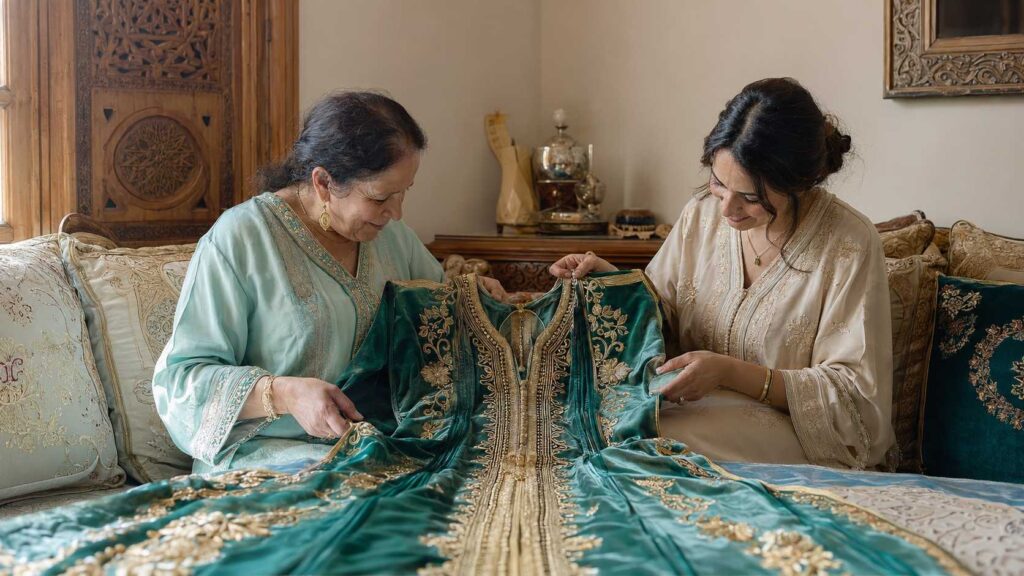
A well-made Moroccan caftan is often treated as something worth preserving. Families may store special garments carefully and pass them from mothers to daughters or between other relatives.
An inherited caftan carries more than financial value. It can hold memories of a wedding, holiday or loved one. Even if the size or style is no longer suitable, artisans may adjust the garment or reuse part of its fabric and decoration.
This practice gives the caftan a strong emotional meaning. The garment becomes part of a family story, connecting different generations through craftsmanship and memory.
Modern Designers and the Evolution of the Caftan
Moroccan designers continue to reinterpret the caftan. Some preserve traditional shapes almost exactly, while others experiment with sleeves, colors, fabrics and lighter construction.
Modern versions may use simple lines and limited decoration. Others combine traditional sfifa and embroidery with contemporary fashion trends. Designers also present caftans in international exhibitions and fashion events, helping Moroccan craftsmanship reach new audiences.
Change does not necessarily weaken the tradition. The caftan has survived partly because it can adapt. New designs allow younger wearers to connect with the garment while skilled artisans continue practicing the techniques that make it distinctive.
The challenge is to innovate without losing the knowledge behind the garment. When traditional skills remain respected, modern fashion can help keep them economically and culturally alive.
The Moroccan Caftan and UNESCO Recognition
In December 2025, “Moroccan Caftan: art, traditions and skills” was inscribed on UNESCO’s Representative List of the Intangible Cultural Heritage of Humanity.
The recognition concerns more than the physical garment. It highlights the knowledge, social practices and community of artisans involved in designing, producing and wearing the caftan.
This is important because intangible heritage depends on transmission. Skills must be taught, practiced and valued by new generations. Supporting artisans and recognizing authentic work can help protect the tradition from being reduced to mass-produced decoration.
UNESCO recognition also confirms the caftan’s place as a symbol of Moroccan identity, social connection and regional diversity.
How Travelers Can Appreciate Moroccan Caftan Craftsmanship
Travelers can discover the Moroccan caftan in medina workshops, artisan cooperatives, cultural exhibitions and specialist boutiques. Watching an artisan prepare sfifa, embroidery or buttons can reveal how much time is hidden inside one garment.
Visitors who want to purchase a caftan should ask about the fabric, production method and amount of handwork. A very low price may indicate machine-made decoration or mass production rather than traditional craftsmanship.
It is also important to buy respectfully. Asking permission before photographing artisans, showing patience during customization and paying a fair price demonstrate appreciation for their work.
Learning the names of techniques can make the experience more meaningful. Instead of seeing only a beautiful dress, travelers begin to recognize the many skills and people behind it.
1. What is a Moroccan caftan?
A Moroccan caftan is a long traditional garment, usually with long sleeves and decorative trim along the front and neckline. It is commonly worn for weddings, religious holidays and important celebrations, although its fabric and decoration can range from simple to highly elaborate.
2. What is the difference between a caftan and a takchita?
A Moroccan caftan is generally made as one main garment. A takchita usually has two layers: a simpler underdress and a more decorative outer layer. Both may be worn with a mdamma belt and decorated with embroidery, sfifa and handmade buttons.
3. How long does it take to make a Moroccan caftan?
The time depends on the design. A simple caftan may take days or a few weeks, while a garment with extensive hand embroidery, aakad and beadwork can require several weeks or even months. Multiple artisans may work on different stages.
4. When do Moroccans wear caftans?
Moroccans commonly wear caftans at weddings, engagements, Eid celebrations, formal dinners and major family occasions. The design is normally chosen according to the importance, season and time of the event.
5. Is the Moroccan caftan recognized by UNESCO?
Yes. In December 2025, UNESCO inscribed “Moroccan Caftan: art, traditions and skills” on the Representative List of the Intangible Cultural Heritage of Humanity. The recognition includes the craftsmanship, knowledge and social traditions connected with the garment.
The Moroccan caftan is far more than elegant ceremonial clothing. It brings together history, family memory, regional identity and the work of many skilled hands. Its fabric may change and its designs may evolve, but details such as sfifa, aakad, embroidery and careful tailoring continue to express a distinctive Moroccan tradition.
From royal courts to modern weddings and international fashion events, the caftan has remained relevant by balancing continuity with creativity. Its UNESCO recognition strengthens the importance of protecting the artisans and knowledge that give the garment its meaning.
Do you think the future of the Moroccan caftan depends more on preserving traditional designs or allowing new generations to reinvent them?