
Why Is Chefchaouen Painted Blue? The Story Behind Morocco’s Blue City Explained
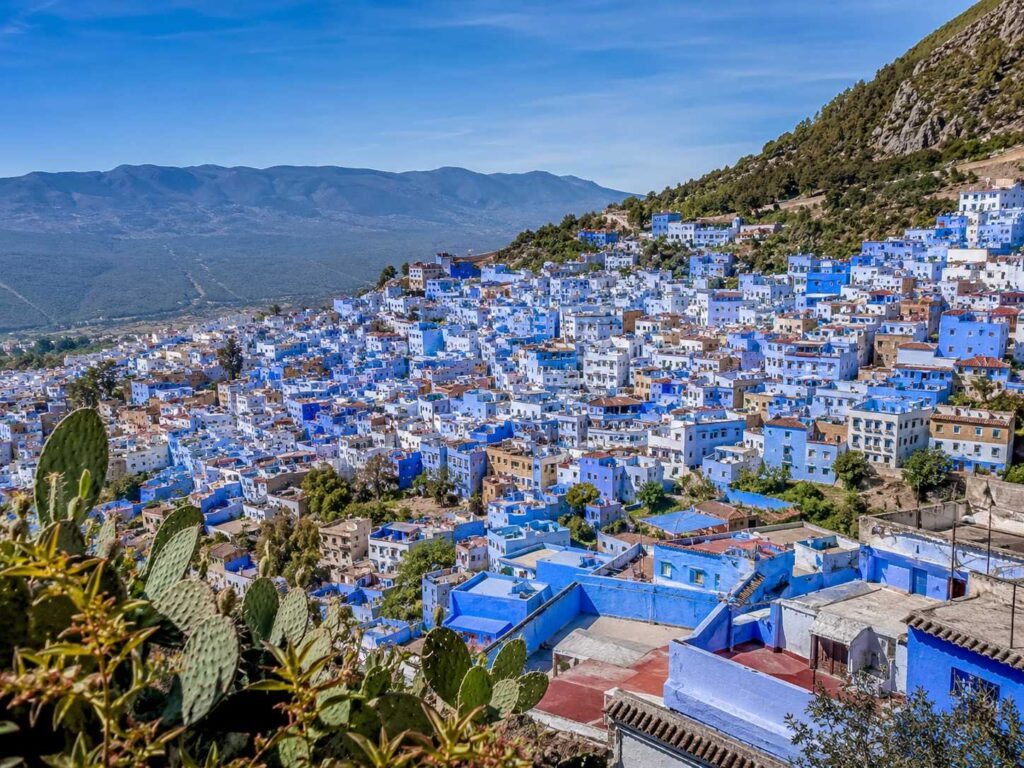
The Chefchaouen blue city is one of Morocco’s most recognizable visual landmarks. Located in the Rif Mountains, Chefchaouen is known worldwide for its striking blue-painted streets and buildings. The tradition of painting the town blue has attracted global attention, but the real reasons behind it are rooted in history, culture, and interpretation rather than a single explanation.
Understanding the Chefchaouen blue city requires looking at both historical influences and local beliefs that shaped the town’s identity over time.
What Is the Chefchaouen Blue City?
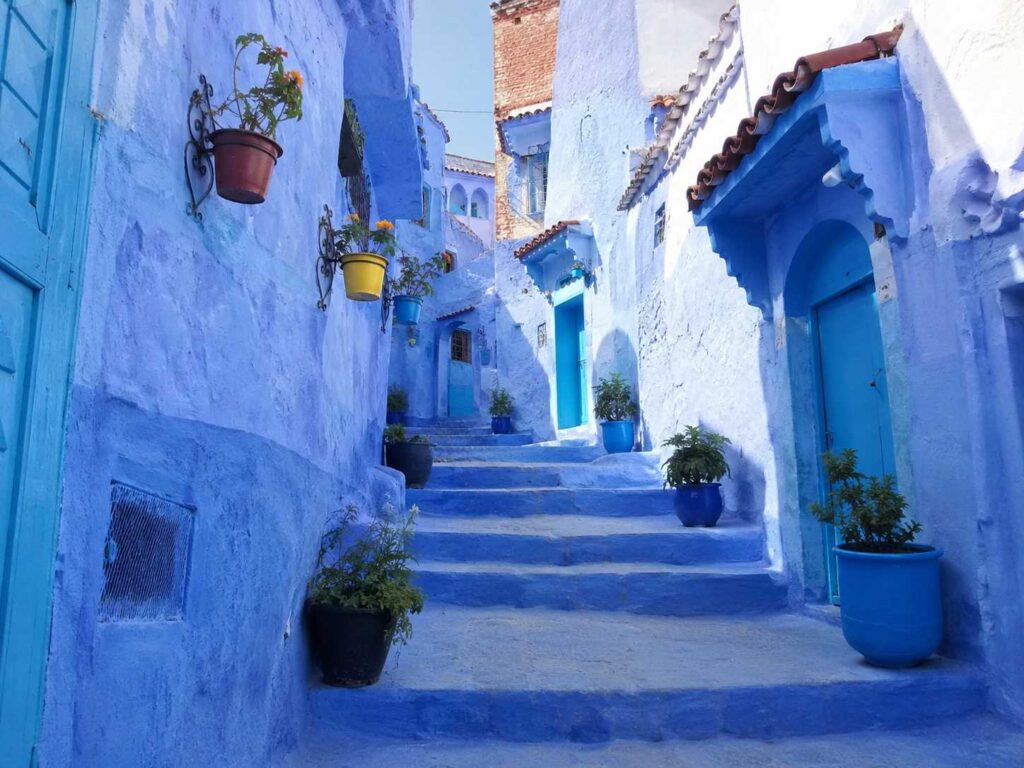
The Chefchaouen blue city refers to the old medina of Chefchaouen, where most buildings are painted in different shades of blue. This practice is especially visible in the narrow streets, stairways, doors, and walls that define the historic center.
Chefchaouen was founded in 1471 and later became home to different communities, including Jewish refugees who played a role in shaping parts of its cultural and visual identity. Over time, the blue color became a defining characteristic of the town.
Origins of the Chefchaouen Blue City Tradition
The Chefchaouen blue city tradition is often linked to Jewish symbolism. Some Jewish communities believed blue represented the sky and heaven, reminding people of spirituality and divine presence.
When Jewish refugees settled in Chefchaouen in the 20th century, they are believed to have introduced or reinforced the practice of painting walls blue. While this is one of the most widely accepted explanations, it is not the only one.
Why Is the Chefchaouen Blue City Painted Blue?
The Chefchaouen blue city is painted blue for several overlapping reasons rather than a single historical cause.
One explanation suggests that the blue color helps keep buildings cooler during hot summers. Light blue shades reflect sunlight and may contribute to a more comfortable indoor temperature in a mountainous region where temperatures can rise significantly during the day.
Another interpretation is symbolic. The blue color is often associated with the sky, water, and spirituality. For some residents, painting homes blue represents a connection between earth and heaven, encouraging reflection and peace in daily life.
There is also a more practical modern explanation. In recent decades, the blue color has become a major attraction for tourism. As Chefchaouen gained international attention, maintaining the blue aesthetic became part of preserving its identity and visual appeal.
The Meaning Behind the Chefchaouen Blue City Color
In the Chefchaouen blue city, color is not just decoration. It carries meaning shaped by tradition and community habits.
Cultural Interpretations of the Chefchaouen Blue City
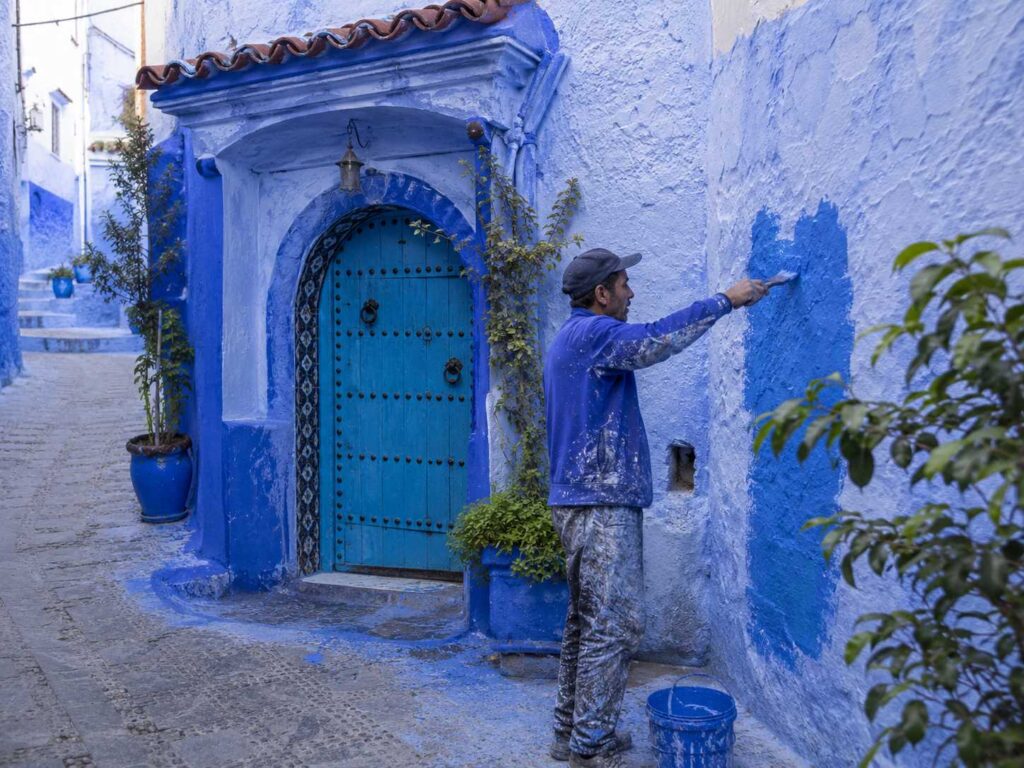
Some residents associate the blue color with protection. Others view it as a symbol of cleanliness and calmness. Over time, repainting walls in blue became a shared community practice, helping maintain the town’s distinctive appearance.
The Chefchaouen blue city is also influenced by practical maintenance habits. Lime-based paint mixed with blue pigment is often used, which requires regular repainting. This continuous renewal helps preserve the strong blue tone across the medina.
Daily Life in the Chefchaouen Blue City
Life in the Chefchaouen blue city is shaped by its geography and architecture. The town is smaller and quieter compared to major Moroccan cities, with daily life centered around local markets, small shops, and community interactions.
The blue-painted environment creates a unique atmosphere that influences how people move through the streets and interact with their surroundings. Photographers and visitors often describe the visual consistency as calming and immersive, but for residents, it remains simply part of everyday life.
How the Chefchaouen Blue City Became Famous
The Chefchaouen blue city gained global recognition through photography and social media. Images of blue streets and staircases spread widely, turning Chefchaouen into one of the most photographed destinations in Morocco.
However, beyond its visual identity, the town remains a living community with traditions, families, and local culture that extend far beyond tourism.
Preservation of the Chefchaouen Blue City Identity
Maintaining the Chefchaouen blue city look is partly driven by community pride. Residents regularly repaint walls to preserve the traditional aesthetic, especially in the old medina.
This continuous maintenance helps ensure that the town retains its distinctive character while adapting to modern influences.
1. Why is Chefchaouen called the blue city?
Chefchaouen is called the blue city because many buildings in its old medina are painted in different shades of blue. The blue color appears on walls, doors, stairways, and narrow streets, making it one of Morocco’s most recognizable towns.
2. What is the main reason Chefchaouen is painted blue?
There is no single confirmed reason. The blue color is often linked to Jewish symbolism, spirituality, cooling effects, cleanliness, protection, and tourism. Over time, these different meanings became part of Chefchaouen’s identity.
3. Did Jewish refugees influence the blue color in Chefchaouen?
Yes, Jewish refugees are often linked to the blue-painting tradition in Chefchaouen. Some Jewish communities associated blue with the sky, heaven, and spirituality, which may have helped shape the town’s visual identity.
4. Does the blue paint help keep Chefchaouen cool?
Light blue paint may help reflect sunlight, which can make buildings feel cooler during hot days. This is one of the practical explanations connected to the Chefchaouen blue city tradition.
5. Is Chefchaouen still a real living town or mainly a tourist attraction?
Chefchaouen is still a living town with local families, markets, shops, and daily community life. Tourism has made the blue city famous worldwide, but the old medina remains part of everyday life for its residents.
The Chefchaouen blue city is not defined by a single story, but by a combination of cultural traditions, symbolic meanings, and practical choices that evolved over time. Its blue walls reflect history, identity, and community practice rather than a fixed rule.
As you learn more about the Chefchaouen blue city, you start to see it not just as a visual attraction but as a living space shaped by generations.
Do you think Chefchaouen should keep its traditional blue identity exactly as it is, or should it evolve with modern influences? Share your thoughts below.
I pay a visit day-to-day a few blogs and websites to read articles or reviews, except this blog gives quality based content.
Interesting blog! Is your theme custom made or did
you download it from somewhere? A theme like yours with
a few simple adjustements would really make my blog jump out.
Please let me know where you got your theme. Thanks a lot
Hi, everything is going sound here and ofcourse every one is sharing facts, that’s actually good,
keep up writing.
Normally I do not read article on blogs, however I would like to say that this write-up very forced me to try and
do so! Your writing style has been amazed
me. Thank you, very nice post.
I don’t know whether it’s just me or if everyone else experiencing issues with
your blog. It appears as if some of the written text on your posts are running off the screen. Can someone else please comment and let
me know if this is happening to them too? This
could be a issue with my web browser because I’ve had this happen previously.
Cheers
This is the perfect blog for anybody who wants to find out
about this topic. You know so much its almost tough to argue with you (not that I actually will need to…HaHa).
You certainly put a new spin on a topic that has been written about for ages.
Wonderful stuff, just excellent!
Nice post. I learn something totally new and challenging on blogs I stumbleupon every
day. It will always be interesting to read through content from other authors and practice a little something from other web sites.
I’m not sure where you are getting your information, but good topic.
I needs to spend some time learning much more or understanding more.
Thanks for excellent info I was looking for this info for my
mission.
Hi there Dear, are you really visiting this site daily,
if so afterward you will definitely obtain fastidious knowledge.
Hello to every one, it’s in fact a pleasant for me to go to see this site, it contains useful Information.
Everyone loves what you guys are up too. This type of clever work and coverage!
Keep up the excellent works guys I’ve included you
guys to my own blogroll.
Heya i am for the first time here. I came across this board and
I find It really useful & it helped me out
much. I hope to give something back and help others like you aided me.
I don’t even know the way I ended up right here, but I thought
this publish was great. I do not know who you might be however definitely you are going to a well-known blogger in case you are not already.
Cheers!