
Darija vs Arabic Morocco: Clear Guide to Confusing Divide
Darija vs Arabic Morocco is one of the most common linguistic questions for learners, travelers, and even Moroccans themselves who want to understand how language functions in everyday life.
In Morocco, language is not just communication; it is identity, history, and social context. While many people assume Arabic in Morocco is uniform, the reality is more complex. This distinction between Darija vs Arabic Morocco shapes how people speak at home, in school, and in formal settings.
Darija vs Arabic Morocco: main differences
The core of Darija vs Arabic Morocco lies in the difference between Modern Standard Arabic (MSA) and Moroccan Darija. MSA is the formal version used in education, media, and official documents. Darija, on the other hand, is the spoken dialect used in everyday conversations.
Darija vs Arabic Morocco differs mainly in pronunciation, vocabulary, and structure. Darija is heavily influenced by Amazigh languages, French, and Spanish, which makes it quite distinct from classical Arabic. Meanwhile, MSA remains closer to Quranic Arabic and is standardized across the Arab world.
This means a Moroccan person might switch between both depending on the situation, making Darija vs Arabic Morocco a case of bilingual or even diglossic communication.
Darija vs Arabic Morocco in daily communication
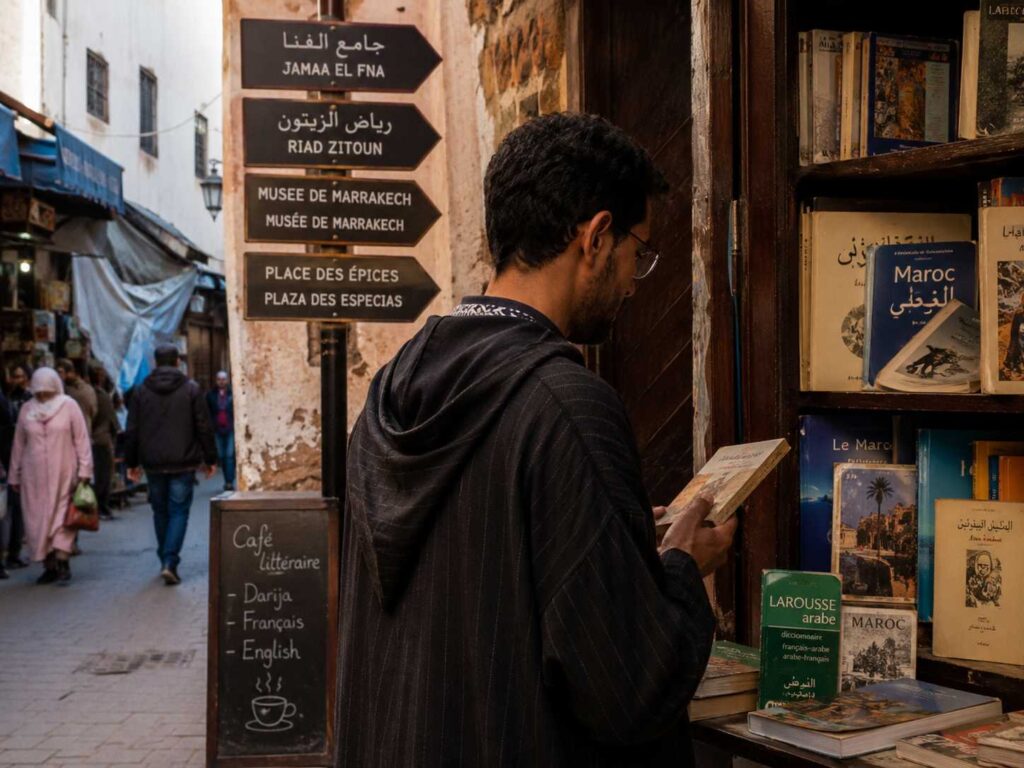
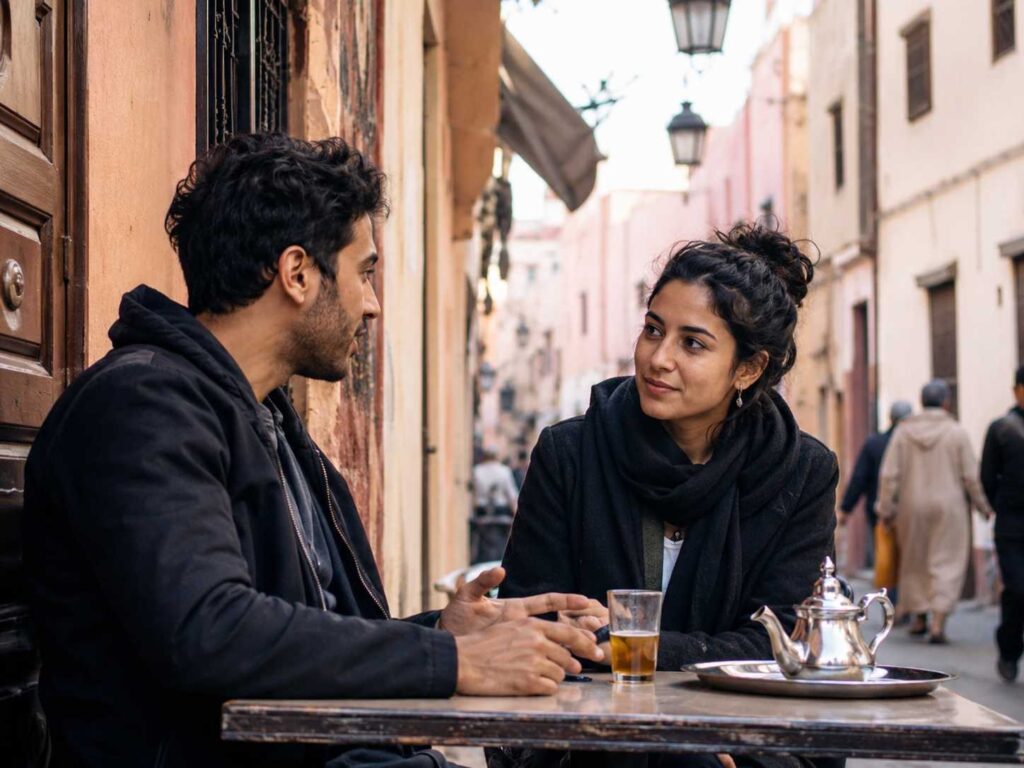
In real-life situations, Darija vs Arabic Morocco becomes very visible. At home or in the street, Moroccans naturally use Darija. It is fast, flexible, and constantly evolving. However, in schools, news broadcasts, and formal speeches, MSA is required.
This dual usage creates a unique linguistic environment where Darija vs Arabic Morocco shapes how people think and express ideas. For example, a simple sentence in Darija might include French words, something that would not be acceptable in formal Arabic writing.
In daily life, this mix is so natural that speakers often switch between Darija and MSA without noticing, depending on context, audience, or purpose. This code-switching is a key feature of Darija vs Arabic Morocco.
Darija vs Arabic Morocco grammar and vocabulary
Darija vs Arabic Morocco structure differences
When analyzing Darija vs Arabic Morocco, grammar is one of the biggest contrasts. Darija simplifies many classical Arabic grammar rules. For example, case endings in MSA disappear completely in Darija, making speech faster and easier.
Darija vs Arabic Morocco vocabulary influence
Vocabulary in Darija vs Arabic Morocco also shows strong foreign influence. Words from French like “très bien” or Spanish-origin terms are commonly integrated into Darija sentences. MSA does not allow this kind of blending, keeping a more standardized Arabic lexicon.
Darija vs Arabic Morocco pronunciation patterns
Pronunciation is another key point in Darija vs Arabic Morocco. Certain Arabic sounds are softened or replaced in Darija, making it more fluid but less formal compared to MSA.
Cultural importance of Darija vs Arabic Morocco
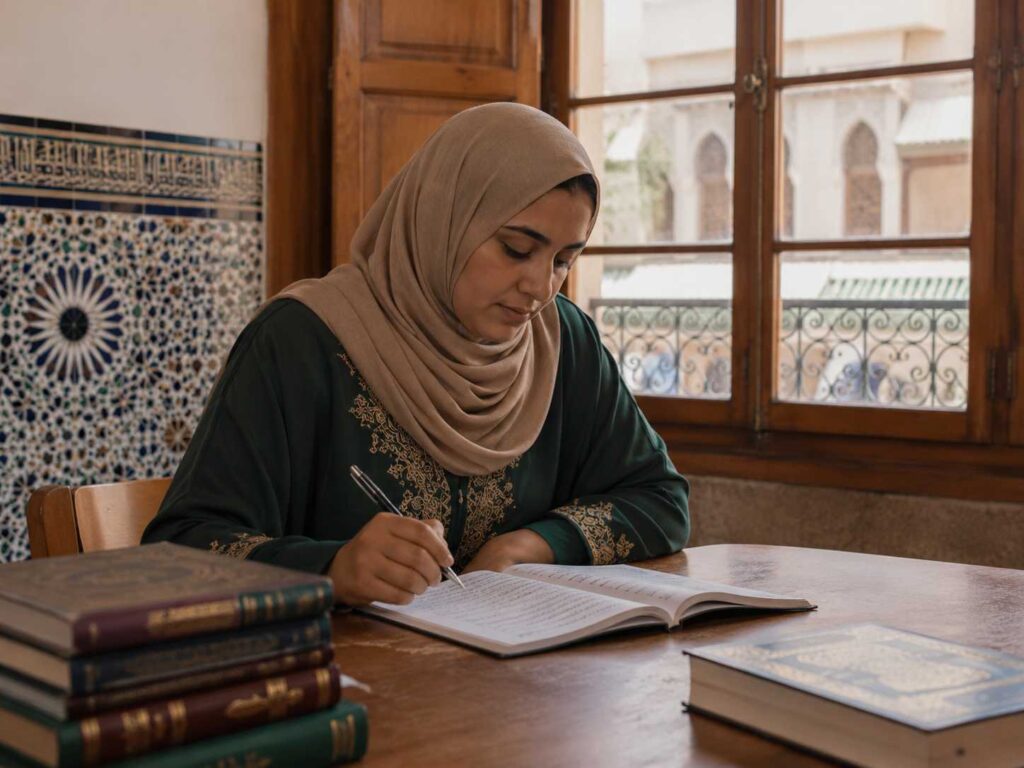
Beyond language rules, Darija vs Arabic Morocco reflects cultural identity. Darija represents Moroccan everyday life, humor, and social connection. MSA represents education, religion, and official communication. Both coexist, creating a layered linguistic identity unique to Morocco.
This balance makes Morocco one of the most linguistically rich countries in the Arab world, where switching between Darija vs Arabic Morocco is part of daily life.
1. What is the difference between Darija and Arabic in Morocco?
Darija is the spoken Moroccan dialect used in daily life, while Modern Standard Arabic is the formal Arabic used in education, media, official documents, and formal speeches.
2. Is Darija the same as Modern Standard Arabic?
No. Darija is different from Modern Standard Arabic in pronunciation, grammar, vocabulary, and usage. Darija is more flexible and includes influences from Amazigh, French, and Spanish.
3. Do Moroccans speak Darija or Arabic every day?
Most Moroccans use Darija in everyday communication at home, in streets, markets, and casual conversations. Modern Standard Arabic is mainly used in formal or educational contexts.
4. Why does Darija include French and Spanish words?
Darija includes French and Spanish words because Morocco’s history, geography, and cultural contact shaped the language over time. These foreign influences became part of normal Moroccan speech.
5. Should learners study Darija or Modern Standard Arabic for Morocco?
For everyday communication in Morocco, Darija is more useful. For reading formal texts, understanding news, studying Arabic, or dealing with official documents, Modern Standard Arabic is important.
The relationship between Darija vs Arabic Morocco shows that language is not just a tool, but a reflection of society, history, and identity. Understanding both forms helps you better connect with Moroccan culture on a deeper level.
Do you think Darija should be recognized as an official written language in Morocco, or should Arabic remain the dominant formal standard?