
Chefchaouen, the Blue City: What to Know Before You Go
Chefchaouen is one of the most recognizable destinations in Morocco. Tucked into the Rif Mountains of northern Morocco, the city is famous for its blue-painted streets, whitewashed buildings, mountain scenery, and relaxed atmosphere.
But there is much more to Chefchaouen, the Blue City than its photogenic walls.
Behind the famous blue streets is a fascinating history shaped by Andalusian refugees, Jewish communities, Amazigh traditions, Islamic heritage, and Morocco’s northern mountain culture. The city’s distinctive architecture and location also help explain why Chefchaouen developed such a unique identity.
For travelers planning a visit, understanding this history can make the experience much more meaningful. Instead of simply walking through blue alleys looking for the perfect photograph, you can understand why the city looks the way it does, how its communities developed, and how its culture remains part of everyday life.
Chefchaouen is also relatively easy to visit from Fes, making it an excellent addition to a northern Morocco itinerary.
This guide explains what you should know before visiting Chefchaouen, the Blue City, including its history, culture, architecture, practical travel information, and the best way to experience it respectfully.
– Explore Chefchaouen Day Trip !
Chefchaouen, the Blue City: Where Is It and Why Is It Famous?
Chefchaouen is located in northern Morocco, in the Rif Mountains, approximately between the major northern cities of Fes and Tangier.
Its mountainous setting immediately distinguishes it from Morocco’s imperial cities.
Instead of the ochre and terracotta colors commonly associated with Marrakech, Chefchaouen is dominated by shades of blue.
The city’s medina contains narrow streets, staircases, small squares, traditional houses, artisan workshops, cafés, and residential neighborhoods painted in different shades of blue.
Why is Chefchaouen called the Blue City?
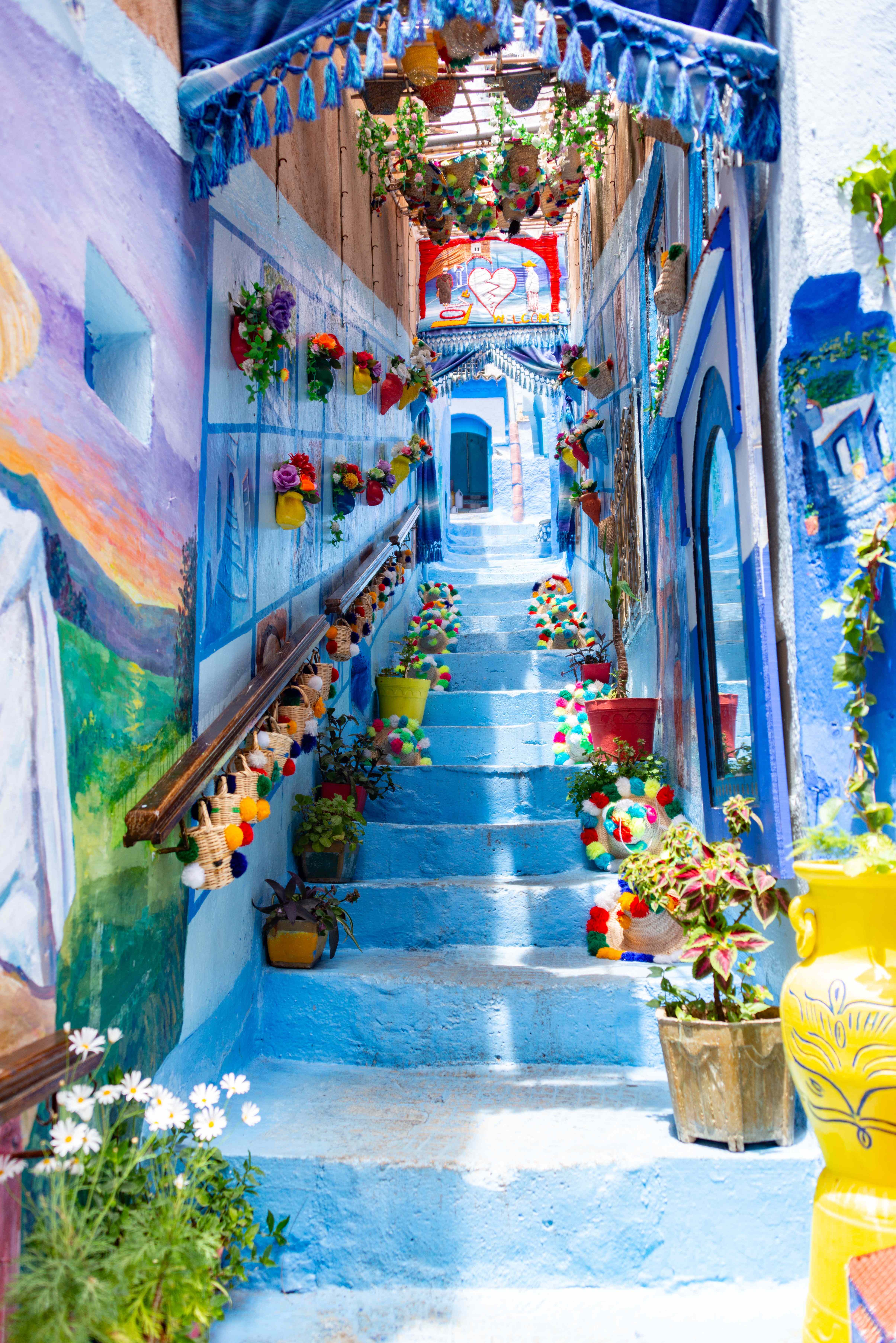
The exact reason for Chefchaouen’s blue color is still debated.
Several explanations are commonly associated with the city’s history.
One explanation connects the blue color with the Jewish refugees who settled in Chefchaouen after fleeing persecution in Europe and the Iberian Peninsula. Blue has traditionally held religious and symbolic significance in Jewish culture, and some accounts suggest that Jewish residents helped popularize the practice of painting buildings blue.
Other explanations point to the practical and aesthetic use of blue paint, including the belief that blue can create a feeling of coolness and help repel insects.
There is no universally accepted single explanation for why the entire medina became blue.
For visitors, this uncertainty is part of what makes Chefchaouen interesting. The blue color is now deeply connected to the city’s identity regardless of how the tradition originally developed.
Chefchaouen’s mountain setting
The city’s name is often associated with the shape of the surrounding mountain peaks.
The Rif Mountains provide a dramatic backdrop and help explain the city’s historic isolation and distinctive character.
Today, the surrounding mountains also make Chefchaouen attractive to travelers interested in hiking, nature, and rural culture.
The History of Chefchaouen: From Mountain Settlement to Tourist Destination
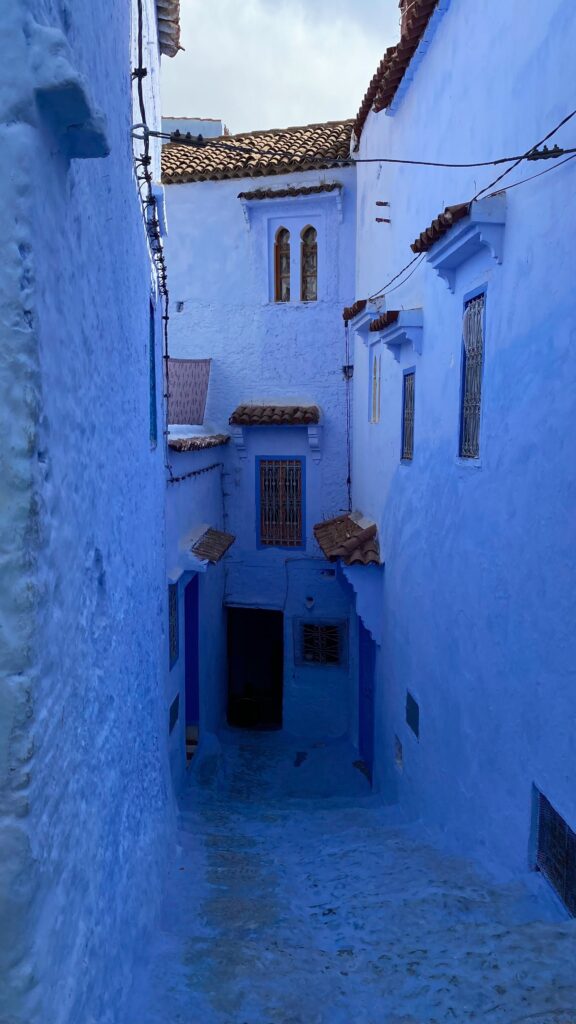
To understand Chefchaouen, it helps to look beyond its modern reputation as one of Morocco’s most photographed cities.
The city was founded in 1471 by Moulay Ali Ben Rachid, traditionally associated with the establishment of Chefchaouen as a fortified settlement.
Its location in the Rif Mountains was strategically important.
Andalusian influence
One of the most important chapters in Chefchaouen’s history came with the arrival of Muslim and Jewish refugees from Al-Andalus following the Christian conquest of Muslim-ruled territories in the Iberian Peninsula.
These communities brought architectural, cultural, and artistic influences that remain visible in the city’s historic character.
The whitewashed houses, tiled details, enclosed courtyards, fountains, and narrow streets reflect a mixture of Moroccan and Andalusian traditions.
This connection helps explain why Chefchaouen can feel visually different from many other Moroccan cities.
Jewish heritage
Jewish communities also played an important role in Chefchaouen’s history.
Jewish refugees settled in the city alongside Muslim communities, contributing to its cultural diversity.
The historic Jewish quarter, or Mellah, provides another reminder of this multicultural past.
Although Chefchaouen’s Jewish community is no longer present in the same way as historically, its heritage remains part of the city’s story.
Chefchaouen under Spanish influence
Northern Morocco experienced significant Spanish influence during the 20th century.
Chefchaouen was occupied by Spanish forces during the period of the Spanish Protectorate in northern Morocco.
This period left traces in the region’s architecture, language, infrastructure, and historical memory.
Today, the city reflects layers of Moroccan, Andalusian, Amazigh, Jewish, and Spanish influences.
Chefchaouen today
Modern Chefchaouen has become one of Morocco’s most popular cultural destinations.
Its medina attracts photographers, independent travelers, families, couples, hikers, and visitors exploring northern Morocco.
Tourism has become an important part of the local economy, but Chefchaouen remains a living city rather than simply a historical attraction.
People still live, work, shop, worship, and raise families inside and around the historic center.
Chefchaouen, the Blue City: Understanding Its Culture and Architecture
The blue color may attract visitors, but Chefchaouen’s architecture tells a much deeper story.
Walking through the medina is like exploring a combination of mountain settlement, Andalusian town, and Moroccan urban neighborhood.
The medina
The Medina of Chefchaouen is the heart of the city.
Its streets are generally pedestrian-friendly and filled with:
- Blue-painted walls
- Whitewashed houses
- Decorative doors
- Small stairways
- Local shops
- Artisan workshops
- Cafés
- Traditional houses
- Small squares
Unlike modern shopping districts, the medina encourages travelers to walk slowly.
There is no need to rush from one landmark to another.
Some of the most interesting details are found in ordinary residential streets.
Traditional doors and houses
Chefchaouen’s doors are particularly photogenic.
You will see different shades of blue combined with white walls, geometric patterns, wood, metal, and traditional Moroccan decorative elements.
Many houses are built around interior courtyards, a traditional architectural approach that provides privacy and helps create a comfortable interior environment.
Plaza Uta el-Hammam
Plaza Uta el-Hammam is the central square of the old medina.
It is surrounded by cafés, restaurants, shops, and historic buildings.
The square is an ideal place to pause after exploring the surrounding streets.
From here, visitors can easily reach some of the city’s most important historical attractions.
Kasbah Museum
The Kasbah Museum, located beside Plaza Uta el-Hammam, provides an introduction to the history and cultural heritage of Chefchaouen.
The historic kasbah itself dates back to the city’s early period and reflects its defensive origins.
Inside, visitors can explore exhibits related to the region’s history, traditional culture, and artistic heritage.
The Grand Mosque
The Grand Mosque of Chefchaouen is another important landmark in the medina.
Its distinctive octagonal minaret reflects a regional architectural style and adds another layer to the city’s visual identity.
As with other active religious buildings in Morocco, visitors should respect local rules regarding access and photography.
Things to Know Before Visiting Chefchaouen
Knowing a few practical details before arriving can make your experience much easier.
Chefchaouen is not completely flat
This is important for travelers with mobility concerns.
The medina contains stairs, slopes, uneven surfaces, and narrow streets.
Comfortable walking shoes are highly recommended.
The mountainous location also means that some viewpoints require uphill walking.
The blue streets can be busy
Chefchaouen is extremely popular.
During busy periods, some of the most famous streets can become crowded, especially when day visitors arrive.
For a quieter experience, explore early in the morning or later in the afternoon.
Early morning is also excellent for photography because the light is softer and the streets are often calmer.
Respect residential areas
Not every blue doorway is a tourist attraction.
Many houses in Chefchaouen’s medina are private homes.
Before photographing people, doors, or private spaces, use common sense and ask permission when appropriate.
Avoid blocking entrances simply to take photographs.
Dress respectfully
Chefchaouen is a tourist-friendly destination, but it remains a Moroccan city with its own cultural norms.
Modest clothing is generally appreciated, particularly when visiting religious or residential areas.
Comfortable, respectful clothing is also practical for walking through the medina.
The Best Things to Do in Chefchaouen for History and Culture
Although Chefchaouen is famous for its blue streets, travelers interested in history should look beyond photography.
Explore the medina on foot
Walking is the best way to understand the city’s layout.
Rather than following only the main tourist streets, explore smaller lanes and look for traditional architecture, local workshops, bakeries, cafés, and residential areas.
Visit the Kasbah
The Kasbah is one of the city’s most important historical structures.
Its gardens, walls, towers, and museum offer insight into Chefchaouen’s origins as a fortified mountain settlement.
Explore Plaza Uta el-Hammam
Spend time in the main square and observe the movement of everyday life.
It is a good place to enjoy Moroccan tea, have lunch, and watch the city around you.
Discover local handicrafts
Chefchaouen is known for traditional handicrafts.
Depending on the season and shop, visitors may find:
- Woven blankets
- Carpets
- Textiles
- Handmade clothing
- Leather goods
- Pottery
- Jewelry
- Woodwork
The city’s mountain location has helped preserve certain craft traditions.
Try local Moroccan food
Food is another way to experience the culture.
Look for traditional Moroccan dishes such as:
- Tagine
- Couscous
- Harira
- Moroccan salads
- Pastilla
- Fresh bread
- Msemen
- Mint tea
Chefchaouen also has restaurants serving international cuisine, but trying local dishes provides a stronger connection to Moroccan culture.
Chefchaouen’s Rif Mountains and Natural Landscape
Chefchaouen is not only a cultural destination.
It is also a gateway to the Rif Mountains.
The surrounding landscapes offer opportunities for hiking, nature walks, photography, and rural exploration.
Spanish Mosque viewpoint
One of the most popular viewpoints near Chefchaouen is the hill where the Spanish Mosque stands.
The walk provides panoramic views across the blue city and surrounding mountains.
Sunset is particularly popular.
If you visit around sunset, allow enough time to walk back safely before it becomes completely dark.
Akchour Waterfalls
For travelers with more time, the Akchour area is one of the most popular natural attractions near Chefchaouen.
Located within the Talassemtane National Park area, Akchour is known for mountain scenery, hiking trails, rivers, and waterfalls.
It is an excellent option for travelers who want to combine Chefchaouen’s cultural heritage with nature.
A visit generally requires additional travel time, so it is better suited to travelers staying longer than a few hours.
Talassemtane National Park
The surrounding national park protects important landscapes and biodiversity in the Rif Mountains.
The region is particularly interesting for hikers and nature enthusiasts.
How Long Should You Stay in Chefchaouen?
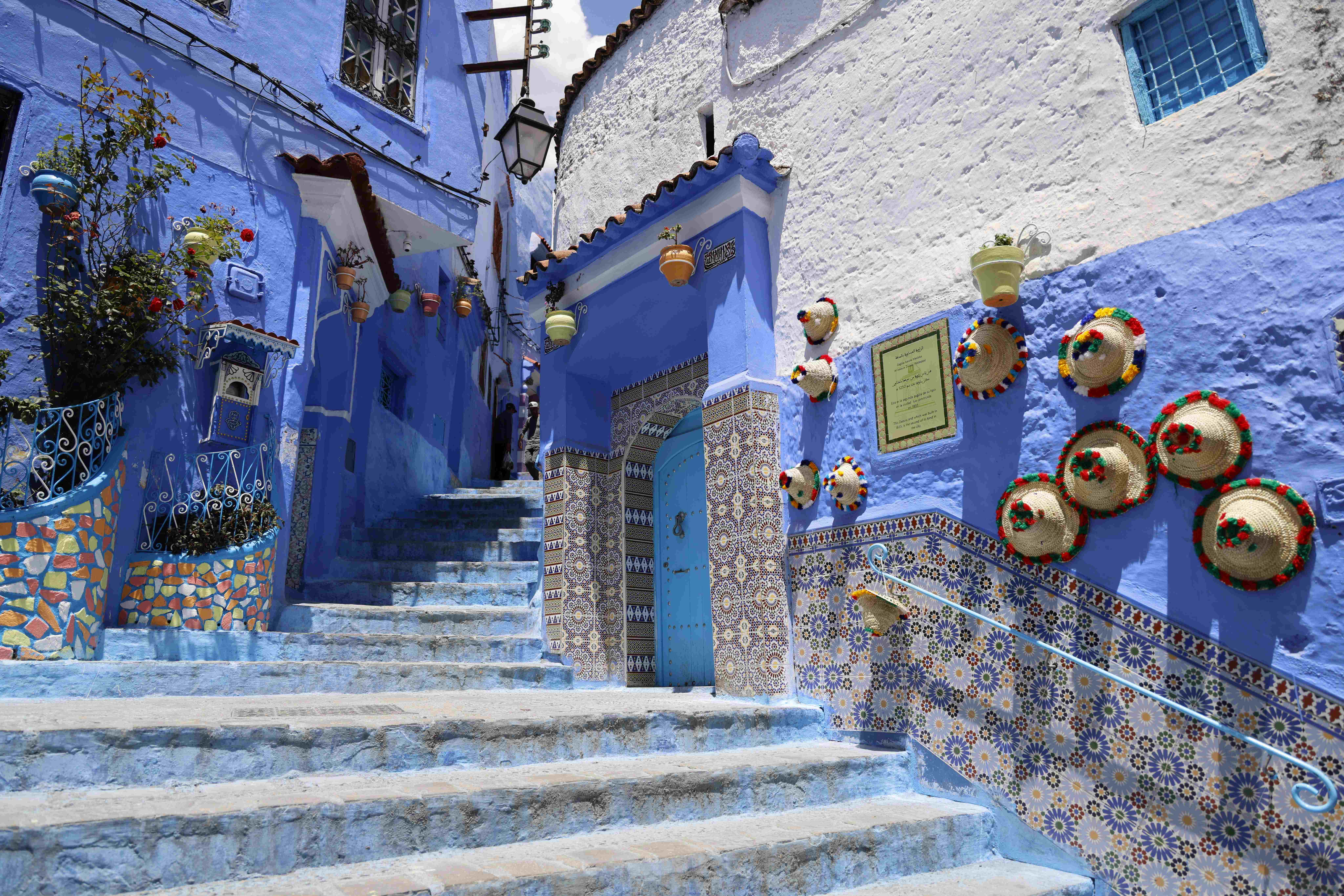
A common question is whether Chefchaouen requires one day or several days.
The answer depends on what you want to do.
One day in Chefchaouen
One full day is enough to explore the main medina.
You can visit:
- Plaza Uta el-Hammam
- Kasbah Museum
- Grand Mosque area
- Blue streets
- Local craft shops
- Spanish Mosque viewpoint
However, you will have limited time for excursions outside the city.
Two days in Chefchaouen
Two days provide a more relaxed experience.
You can spend the first day exploring the historic medina and dedicate the second to nature.
Possible options include:
- Akchour
- Rif Mountain hiking
- Local villages
- Longer walks
- Additional cultural exploration
Three days or more
Three days allow you to slow down significantly.
You can explore the city, visit the mountains, discover nearby villages, and enjoy the local atmosphere without constantly checking the time.
For travelers who value culture and nature, two or three days can be more rewarding than a rushed visit.
Best Time to Visit Chefchaouen
Chefchaouen can be visited throughout the year, but each season offers a different experience.
Spring
Spring is an excellent period for combining city exploration with hiking.
The Rif landscape can be particularly green, and temperatures are generally comfortable.
Summer
Summer attracts many visitors.
Temperatures can be pleasant in the mountains compared with hotter inland destinations, but popular areas can become crowded.
Autumn
Autumn offers comfortable conditions for walking and exploring the surrounding Rif landscapes.
It can be an excellent choice for travelers who want a balance between weather and visitor numbers.
Winter
Winter can be cooler and wetter.
The mountains may receive rain, and conditions can change quickly.
If hiking outside the city, check local weather conditions and prepare accordingly.
Chefchaouen, the Blue City: Travel Tips for a Better Experience
A few simple choices can significantly improve your visit.
Start early
Early morning is one of the best times to explore Chefchaouen.
The medina is quieter, the light is beautiful, and you can photograph the streets without large crowds.
Stay overnight if possible
An overnight stay gives you the opportunity to experience Chefchaouen after day visitors have left.
The evening atmosphere is completely different from the busy daytime streets.
Carry cash
Small shops and local businesses may not always accept cards.
Having Moroccan dirhams available is useful for cafés, markets, taxis, and small purchases.
Wear comfortable shoes
The combination of hills, stairs, and uneven streets makes comfortable shoes essential.
Don’t focus only on the blue walls
The color is beautiful, but the real value of Chefchaouen lies in its history and people.
Learn about the city’s Andalusian heritage.
Visit the kasbah.
Explore the Mellah.
Talk to local artisans.
Taste local food.
Walk beyond the most photographed streets.
That is how you turn a photo stop into a cultural experience.
Responsible Tourism in Chefchaouen
Chefchaouen’s popularity has brought economic opportunities, but increased tourism also creates pressure on historic neighborhoods.
Visitors can help by traveling responsibly.
Support local businesses
Eat at locally owned restaurants, buy from genuine artisans, and consider staying in locally operated accommodation.
Respect residents
Remember that the medina is a residential neighborhood.
Keep noise down, avoid entering private spaces, and ask before photographing people.
Avoid litter
The blue streets may look perfect in photographs, but keeping them clean requires cooperation from everyone.
Carry your waste until you find an appropriate bin.
Respect cultural sites
Follow instructions at religious monuments and historical sites.
Some places may have restricted access for non-Muslim visitors.
FAQ’s
Chefchaouen is called the Blue City because many buildings and streets in its historic medina are painted in different shades of blue. The origin of the tradition is debated, with explanations connecting it to Jewish heritage, symbolism, aesthetics, and practical reasons. Today, blue is an essential part of Chefchaouen’s identity.
Yes. Chefchaouen is one of the most popular cultural destinations to visit from Fes, especially for travelers interested in history, architecture, photography, and the Rif Mountains. A private tour from Fes can make the journey more convenient and allow you to explore the city at your own pace.
– Explore Chefchaouen Day Trip from fes !
One full day is enough to explore the main historic attractions, including the medina, Plaza Uta el-Hammam, Kasbah, and major viewpoints. Two or three days are better if you want to explore the Rif Mountains, visit Akchour, or experience Chefchaouen at a slower pace.
Chefchaouen is also famous for its Rif Mountain location, Andalusian heritage, historic medina, traditional crafts, local food, Jewish and Islamic heritage, and proximity to natural attractions such as Akchour and Talassemtane National Park.
The best option depends on your travel style. Public transportation can be suitable for independent travelers, while a private Chefchaouen tour from Fes provides door-to-door transportation, more flexibility, and the possibility of combining sightseeing with other northern Morocco destinations.
Chefchaouen is much more than Morocco’s famous Blue City. Its blue-painted medina, Rif Mountain setting, Andalusian heritage, Jewish history, Amazigh influences, traditional architecture, and local culture make it one of northern Morocco’s most fascinating destinations. Whether you visit from Fes for a day or stay longer to explore the surrounding mountains, taking time to understand the city’s history will make your experience far more meaningful.
If you are planning a trip from Fes, Chefchaouen is an excellent opportunity to discover a different side of Morocco, away from the country’s larger imperial cities. Have you already visited Chefchaouen, or is the Blue City on your Morocco travel list? What would you most like to discover there? Share your thoughts in the comments below!