
Morocco is famous for its colorful souks, historic medinas, delicious cuisine, and breathtaking landscapes, but one of the most fascinating parts of Moroccan culture is found in its Moroccan wedding traditions. A traditional Moroccan wedding is much more than a single celebration. It is a cultural experience filled with music, family gatherings, traditional clothing, henna, Moroccan food, symbolic rituals, and centuries-old customs.
Although Moroccan weddings are often associated with elaborate celebrations lasting several days, modern Moroccan weddings can be much shorter. The exact traditions vary considerably depending on the region, family background, and personal preferences. A wedding in Fes may look different from one in Marrakech, Casablanca, Tangier, the Rif, or the Amazigh regions of southern Morocco.
For travelers visiting Morocco, learning about these customs provides a deeper understanding of Moroccan culture and hospitality. Whether you are exploring the imperial cities, staying in a traditional riad, or traveling through the Sahara Desert, you will discover that family, community, hospitality, and celebration remain central to Moroccan life.
In this guide, we explore the most important Moroccan wedding traditions, from the engagement and henna ceremony to traditional Moroccan wedding dresses, music, food, the famous Amariya entrance, and modern wedding celebrations.
Moroccan Wedding Traditions and Their Cultural Meaning
A Moroccan wedding traditionally represents much more than the union of two people. It is also an important moment for bringing families together and celebrating relationships between relatives, friends, and the wider community.
Historically, wedding celebrations could continue for several days, with different rituals taking place before, during, and after the main wedding celebration. Today, however, many Moroccan couples organize a single large wedding reception, sometimes combined with a separate henna ceremony or family gathering.
Family plays an important role
Family involvement is one of the most recognizable elements of Moroccan wedding culture. Parents, grandparents, siblings, cousins, and close friends often participate in preparations and celebrations.
For many Moroccan families, a wedding is an opportunity to:
- Bring relatives together
- Celebrate the newly married couple
- Share traditional food
- Preserve regional customs
- Wear traditional clothing
- Welcome guests
- Strengthen family relationships
Hospitality is also extremely important. Guests are commonly welcomed with Moroccan tea, pastries, meals, music, and generous hospitality.
Moroccan weddings vary by region
There is no single version of a Moroccan wedding.
The traditions practiced in Fes can differ from those in Marrakech, Casablanca, Tangier, the Souss region, or the Rif. Traditional clothing, music, dances, food, and ceremonies can all change according to regional identity.
This regional diversity is one of the reasons Moroccan culture is so fascinating for travelers.
If you want to experience this cultural diversity yourself, explore the Morocco itineraries offered by Moroccan Trips, including journeys through Marrakech, Fes, the Sahara, and other destinations.
Moroccan Wedding Traditions Before the Wedding
Before the main celebration, Moroccan families may take part in several important stages.
The exact sequence differs from one family to another, but traditional Moroccan weddings often involve an engagement period, family meetings, preparations, and sometimes a hammam ceremony or henna celebration.
The engagement and family gathering
Traditionally, marriage involves the meeting and involvement of the two families. The engagement can be an important social occasion where relatives come together and discuss the future marriage.
In modern Morocco, couples have much more freedom in how they organize their engagement and wedding. Some couples follow traditional customs closely, while others combine Moroccan traditions with contemporary Western-style celebrations.
The marriage contract
The legal and religious aspects of marriage are also important.
A marriage contract, commonly associated with the adoul process, formalizes the marriage according to Moroccan law and Islamic tradition. Depending on the family, this may take place before the main wedding celebration.
The celebration itself can then become the large social event where relatives and friends gather to congratulate the couple.
The Moroccan hammam tradition
One traditional pre-wedding custom is the hammam visit.
The bride may visit a Moroccan hammam with female relatives and friends before the wedding. The occasion can be both practical and symbolic: it is a moment of preparation, relaxation, family bonding, and celebration.
The Moroccan hammam has a long cultural history and remains an important part of traditional Moroccan life.
For travelers interested in discovering Moroccan culture beyond the major tourist attractions, visiting traditional neighborhoods, markets, and historic medinas can offer a more authentic perspective.
Moroccan Wedding Traditions and the Henna Ceremony
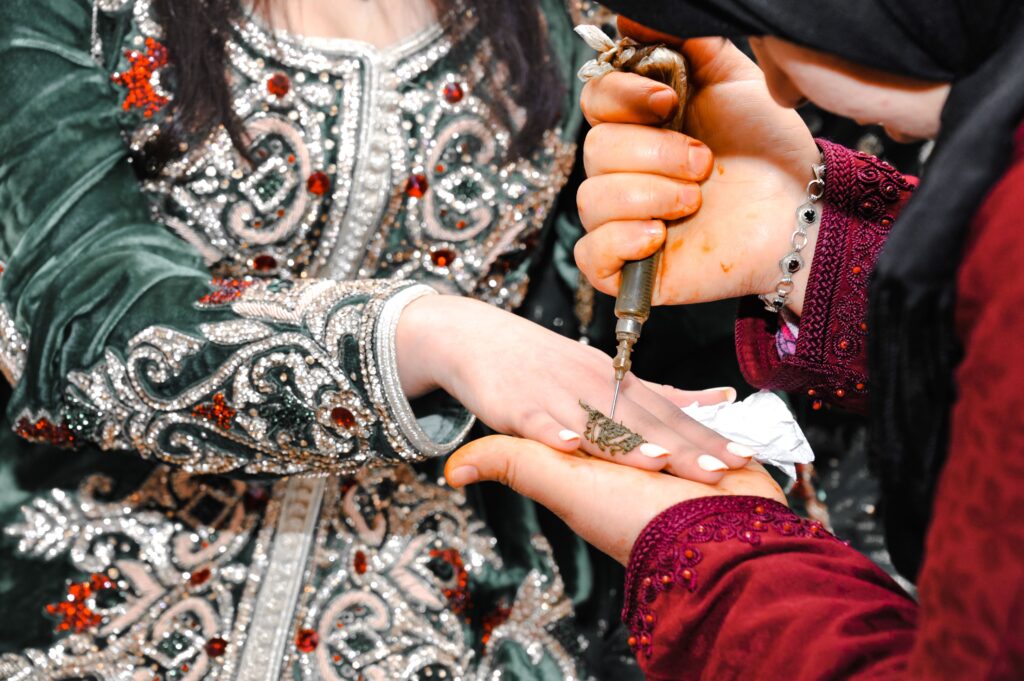
The henna ceremony is one of the most recognizable Moroccan wedding traditions.
Henna is applied to the bride’s hands and sometimes feet in decorative patterns. The ceremony can be intimate or elaborate depending on the family and region.
Why is henna important?
Henna has a strong cultural significance across Morocco. It is traditionally associated with celebration, beauty, blessings, and important life transitions.
The bride’s henna ceremony can bring together female members of the family and close friends. Guests may sing, dance, eat traditional sweets, and celebrate the bride before the main wedding.
The exact format is not universal. Some families organize a dedicated henna night, while others incorporate henna into a larger wedding celebration. Regional and family differences are important when discussing this tradition.
The bride’s green outfit
Green is traditionally associated with Moroccan henna celebrations, and brides may wear a green traditional outfit during the ceremony.
However, contemporary Moroccan brides are not limited to one style. They may choose several traditional outfits throughout the wedding and may also include a modern white wedding dress.
Henna artists and decorative designs
A professional henna artist may create intricate patterns on the bride’s hands.
The designs can be highly detailed, incorporating floral, geometric, and traditional motifs. The ceremony provides an opportunity to showcase Moroccan craftsmanship and beauty traditions.
For visitors interested in Moroccan culture, the henna ceremony is an excellent example of how traditional art remains part of contemporary Moroccan celebrations.
Moroccan Wedding Traditions, Caftans, and Traditional Clothing
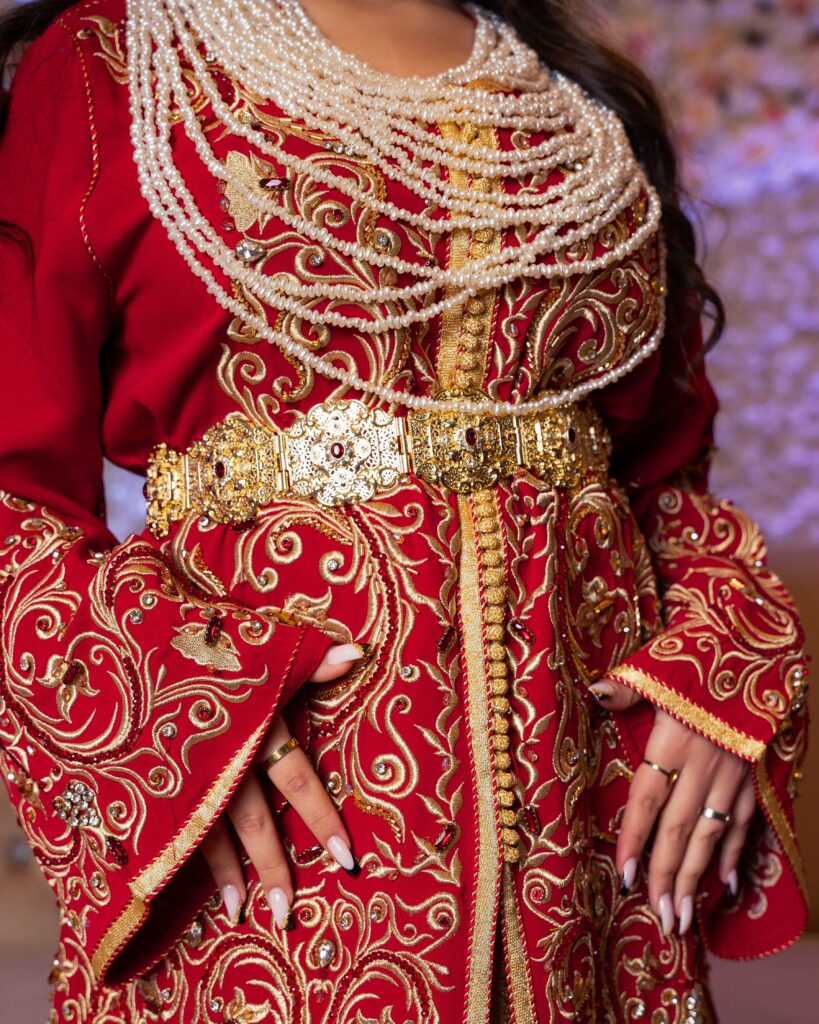
One of the most visually spectacular aspects of Moroccan wedding traditions is traditional clothing.
A Moroccan bride may wear several outfits during the wedding rather than just one dress. This tradition allows her to showcase different regional styles and the incredible craftsmanship of Moroccan clothing.
The Moroccan caftan
The Moroccan caftan is one of the most recognizable traditional garments associated with weddings and special occasions.
Depending on the style, it may feature:
- Intricate embroidery
- Gold or silver decoration
- Decorative belts
- Fine fabrics
- Traditional Moroccan patterns
- Handmade accessories
The takchita is another popular formal outfit and is often associated with Moroccan celebrations.
Regional wedding outfits
Moroccan wedding clothing can reflect the bride’s regional heritage.
A bride from Fes may choose a traditional Fassi outfit, while another bride may incorporate Amazigh, northern Moroccan, Saharan, or southern Moroccan clothing into her celebration.
This is particularly important because Morocco’s cultural identity is highly diverse.
The groom’s traditional clothing
The groom may also wear traditional Moroccan clothing, including a jabador, djellaba, or other formal garments.
Some grooms choose traditional clothing for part of the wedding and a Western-style suit for another part of the celebration.
Why Moroccan wedding clothing is important
Traditional wedding clothing is not simply about appearance. It reflects Moroccan craftsmanship, regional identity, family heritage, and cultural pride.
For travelers visiting Fes or Marrakech, exploring traditional clothing markets and artisan workshops can provide another way to understand Moroccan craftsmanship.
If Fes is part of your Morocco itinerary, consider combining cultural exploration with a Sahara experience through the 3 Days Desert Tour from Fes.
Moroccan Wedding Traditions and the Amariya Entrance
One of the most memorable moments of a traditional Moroccan wedding is the bride’s grand entrance.
The bride may enter the celebration seated on the Amariya, a decorated platform or ceremonial structure carried by attendants.
This creates a dramatic moment as guests celebrate the bride with music, singing, dancing, and applause.
What happens during the Amariya entrance?
The bride is traditionally lifted or carried into the wedding venue while musicians and guests celebrate.
The exact style varies between families and regions, but the entrance is generally designed to give the bride a spectacular arrival and make her the center of attention.
The groom may also have his own ceremonial entrance.
The role of the Negafa
The Negafa is traditionally responsible for helping coordinate important aspects of the bride’s appearance and presentation.
Depending on the wedding, the Negafa may help with:
- Traditional outfits
- Jewelry
- Accessories
- Makeup coordination
- Wedding entrances
- Outfit changes
- Ceremonial details
In elaborate weddings, the bride may change outfits several times throughout the evening.
This creates a celebration that feels almost like a cultural fashion show, with each outfit revealing another part of Morocco’s rich textile heritage.
Moroccan Wedding Traditions: Music, Dance, and Celebration
Music is at the heart of many Moroccan wedding traditions.
A Moroccan wedding can be lively, energetic, and filled with traditional instruments, modern music, singing, and dancing.
The musical style depends heavily on the region and family background.
Traditional Moroccan music
Guests may hear different styles of Moroccan music, including:
- Chaabi
- Gnawa
- Andalusian-inspired music
- Amazigh music
- Aita
- Dakka Marrakchia
- Issawa
- Regional folk music
Marrakech, for example, is famous for Dakka Marrakchia, while Amazigh regions have their own musical traditions and dances.
Dancing at Moroccan weddings
Dancing is an important part of the celebration.
Guests may dance in groups, form circles, clap to the rhythm, or participate in regional dances.
The atmosphere can change throughout the night as musicians or DJs move between traditional Moroccan songs and contemporary music.
Weddings and Moroccan hospitality
Food and music often work together to create the welcoming atmosphere associated with Moroccan celebrations.
Guests are encouraged to eat, socialize, dance, and enjoy themselves.
This emphasis on hospitality is one of the characteristics that travelers frequently notice when experiencing Moroccan culture.
If you want to explore Morocco’s music, cuisine, architecture, and landscapes while traveling between major cities, the 4 Days Desert Tour from Marrakech to Fes combines Marrakech, the Sahara, and Fes in one itinerary.
Moroccan Wedding Traditions and Traditional Moroccan Food
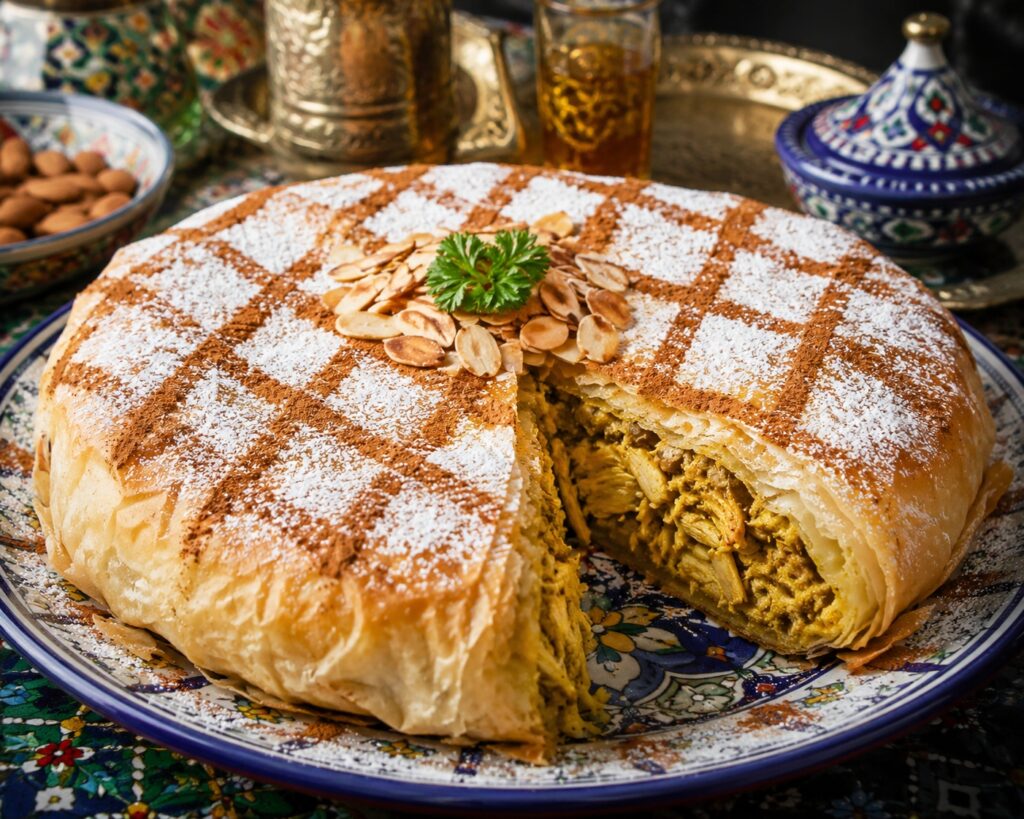
Food is another essential part of Moroccan wedding traditions.
A wedding meal can be extremely generous, with several dishes served throughout the celebration.
Popular Moroccan wedding dishes
Depending on the region and family, guests may enjoy dishes such as:
- Chicken pastilla
- Lamb with prunes
- Moroccan salads
- Couscous
- Lamb mechoui
- Tagine
- Moroccan pastries
- Fresh fruit
- Mint tea
- Traditional juices
The menu can vary significantly according to the family’s preferences and the scale of the event.
Moroccan pastries and mint tea
Moroccan pastries are often served alongside Moroccan mint tea.
Popular sweets may include almond-based pastries, chebakia, ghriba, and other traditional treats.
Mint tea is particularly important in Moroccan hospitality and may be served to guests before, during, or after meals.
A celebration built around sharing
The importance of Moroccan wedding food goes beyond the dishes themselves.
Eating together creates opportunities for relatives and friends to socialize and celebrate the newly married couple.
For travelers, Moroccan cuisine is one of the best ways to connect with the country’s cultural heritage.
Moroccan Trips also incorporates food, local markets, and cultural experiences into its wider travel experiences.
Moroccan Wedding Traditions Today: Traditional Meets Modern
Modern Moroccan weddings are changing, but many traditional elements remain popular.
Today, couples may combine traditional Moroccan ceremonies with contemporary wedding planning.
A modern wedding might include:
- A traditional henna ceremony
- Moroccan caftans
- A white wedding dress
- A modern wedding venue
- Traditional musicians
- A DJ
- Professional photography
- A multi-course Moroccan dinner
- A wedding cake
- Traditional family rituals
Are Moroccan weddings still seven days long?
Not necessarily.
The idea of a traditional seven-day Moroccan wedding is well known, but it should not be treated as the standard for every Moroccan family today. Many modern weddings take place over one main evening, sometimes accompanied by separate events such as the henna ceremony or marriage contract.
The length and structure of a wedding depend on the family’s traditions, budget, location, and preferences.
Moroccan weddings in Marrakech, Fes, and Casablanca
Large Moroccan cities have become increasingly modern, and wedding venues can range from family homes and traditional riads to luxury hotels and large event halls.
Marrakech is particularly popular for destination weddings because of its architecture, gardens, riads, luxury hotels, and distinctive Moroccan atmosphere.
Fes offers a different cultural setting, with its historic medina, traditional craftsmanship, and deep connection to Moroccan heritage.
Casablanca, Morocco’s largest city, provides a more modern urban environment with contemporary wedding venues and services.
Destination weddings in Morocco
Morocco is also increasingly attractive to international travelers looking for a distinctive destination wedding.
A couple can combine a wedding celebration with a honeymoon or cultural journey through Marrakech, the Atlas Mountains, the Sahara Desert, Fes, and other Moroccan destinations.
For couples planning a Morocco honeymoon after their wedding, a desert itinerary can be an unforgettable addition.
The 6 Days Tour from Marrakech to Desert includes the High Atlas Mountains, Ait Ben Haddou, Dades Valley, Todra Gorges, Merzouga, camel trekking, and a desert camp.
How to Experience Moroccan Wedding Culture as a Traveler
You do not need to attend a private wedding to appreciate Moroccan culture.
Travelers can experience many of the traditions, crafts, foods, music, and environments connected with Moroccan wedding culture during a trip around the country.
Explore Fes for traditional craftsmanship
Fes is particularly interesting for travelers who want to discover traditional Moroccan crafts.
The city’s historic medina is famous for artisans, leatherwork, textiles, metalwork, ceramics, and traditional architecture.
Visit Marrakech for Moroccan culture and celebrations
Marrakech offers a combination of traditional and modern Morocco.
Visitors can explore the medina, souks, palaces, gardens, restaurants, and riads while experiencing the city’s distinctive cultural atmosphere.
Travel to the Sahara
The Sahara adds another dimension to a Morocco itinerary.
A desert journey can include camel trekking, sunset over Erg Chebbi, traditional music, encounters with local communities, and overnight stays in desert camps.
The 3 Days Desert Tour from Marrakech to Fes combines the High Atlas Mountains, Ait Ben Haddou, the Dades and Todra areas, Merzouga, and Fes.
Respect local customs
If you are invited to a Moroccan wedding, remember that it is a private family celebration.
Always ask before taking photographs of people, particularly during emotional or intimate ceremonies.
Dress respectfully, follow the host’s guidance, and observe rather than assuming that every Moroccan family follows the same customs.
Morocco’s wedding culture is diverse, and respecting regional and family differences is one of the best ways to appreciate it.
The main Moroccan wedding traditions can include an engagement, marriage contract, hammam preparation, henna ceremony, traditional clothing, music, dancing, the Amariya entrance, multiple outfit changes, and a large family meal. However, the exact customs vary by region and family.
Modern Moroccan weddings often last one main evening, although some families organize additional events before or after the wedding. Historically, celebrations could extend over several days. The traditional seven-day wedding should not be considered universal in modern Morocco.
A Moroccan bride may wear several traditional outfits, including a caftan or takchita, as well as regional clothing. Some brides also wear a Western-style white wedding dress. The number and style of outfits depend on the bride, family, region, and wedding budget.
A Moroccan henna ceremony is a celebration where henna is applied to the bride’s hands, often accompanied by traditional clothing, music, food, family gatherings, and dancing. It is an important cultural part of many Moroccan weddings, although the exact ceremony varies by region and family.
Tourists can experience elements of Moroccan wedding culture through traditional music, food, clothing, handicrafts, cultural experiences, and travel through cities such as Marrakech and Fes. However, private wedding ceremonies should be treated as family events, and travelers should always respect privacy and ask permission before photographing people.
Moroccan wedding traditions offer a fascinating window into the country’s identity, but they represent only one part of Morocco’s rich cultural heritage.
From the historic medinas of Fes and Marrakech to the Atlas Mountains, ancient kasbahs, Amazigh communities, and Sahara Desert, Morocco offers countless opportunities to discover traditions that have been passed from one generation to another.
Whether you are interested in Moroccan architecture, food, music, traditional clothing, local markets, or desert landscapes, traveling with local knowledge can help you experience the country beyond the typical tourist attractions.
For travelers who want to combine cultural discovery with an unforgettable Sahara experience, Moroccan Trips offers private and customized Morocco itineraries for couples, families, solo travelers, and honeymooners.