
Smart Guide to the Moroccan Souk Experience: Avoid Common Mistakes
The Moroccan souk experience is one of the most recognizable aspects of daily life in Morocco. Whether located in historic medinas or modern towns, souks serve as important centers for trade, social interaction, and cultural exchange. For many visitors, understanding how these traditional markets function can make their visit more enjoyable and help them navigate local customs with greater confidence.
Unlike shopping malls or supermarkets, Moroccan souks operate according to traditions that have developed over centuries. Vendors often specialize in specific products, negotiations are common, and personal interaction remains a key part of the shopping process. Learning about the Moroccan souk experience offers valuable insight into Moroccan culture and everyday life.
What Is the Moroccan Souk Experience?
The Moroccan souk experience refers to the process of visiting and exploring traditional Moroccan markets. These markets can be found throughout the country, particularly in older districts known as medinas.
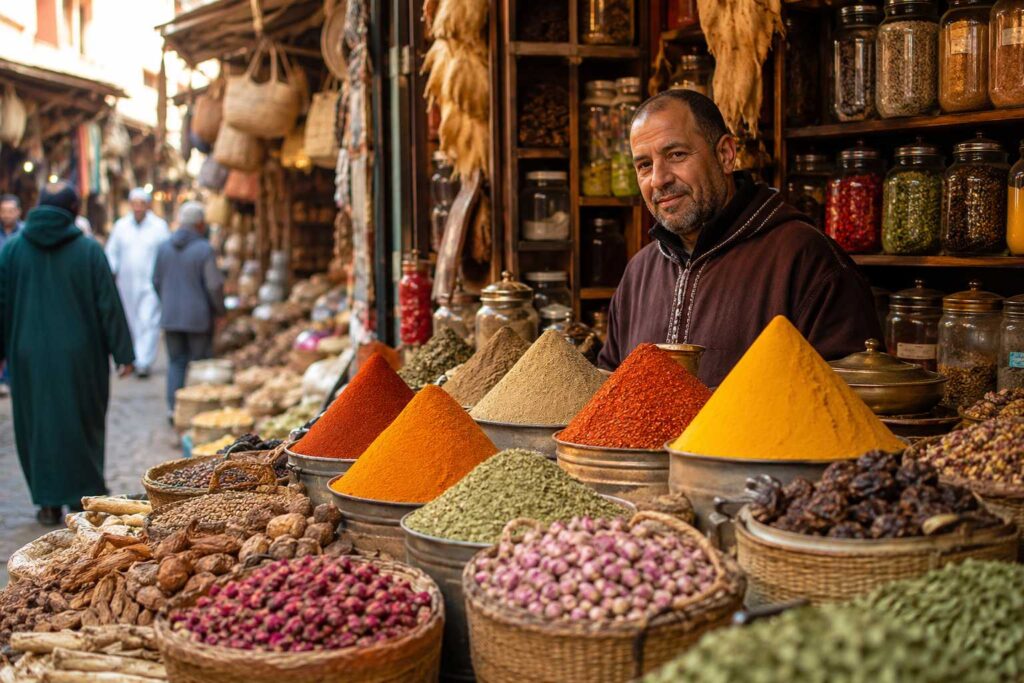
Souks typically consist of narrow streets lined with shops, stalls, and workshops. Different sections of the market often focus on specific goods such as spices, textiles, leather products, pottery, jewelry, or fresh produce. This organization dates back centuries and helped merchants and customers locate products more easily.
Today, souks continue to play an important economic and social role in Moroccan communities.
Types of Markets Found in the Moroccan Souk Experience
Not all souks are the same. The Moroccan souk experience can vary depending on the city, region, and purpose of the market.
Some markets focus on everyday necessities, while others specialize in handcrafted products. Rural souks may operate only on specific days of the week, attracting farmers and traders from surrounding villages. Urban souks, on the other hand, generally remain active throughout the week and serve both residents and visitors.
This diversity makes each souk unique and reflects the local traditions of the region.
How Bargaining Works in the Moroccan Souk Experience
One of the most discussed aspects of the Moroccan souk experience is bargaining.
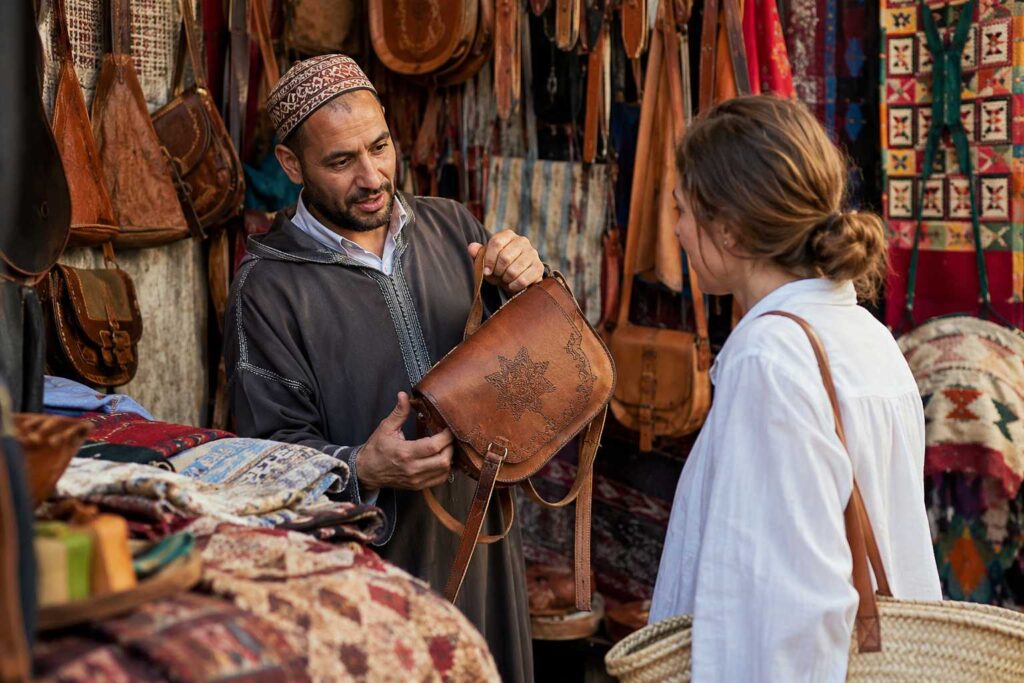
In many souks, prices may not always be fixed, especially for handicrafts and decorative items. Negotiation is considered a normal part of the transaction rather than a conflict between buyer and seller. The process often involves conversation, mutual respect, and patience.
For visitors unfamiliar with bargaining, it is useful to compare prices at several stalls before making a purchase. Remaining polite and friendly can contribute to a positive interaction while helping both parties reach an acceptable agreement.
Why Negotiation Is Part of the Moroccan Souk Experience
Historically, negotiation has been a common commercial practice across North Africa and the Middle East. Within the Moroccan souk experience, bargaining allows buyers and sellers to discuss value directly.
While some modern stores now use fixed pricing, traditional souks continue to preserve this long-standing custom.
Products Commonly Found in the Moroccan Souk Experience
The Moroccan souk experience offers access to a wide variety of products that reflect the country’s cultural heritage.
Visitors commonly encounter:
- Traditional Moroccan rugs
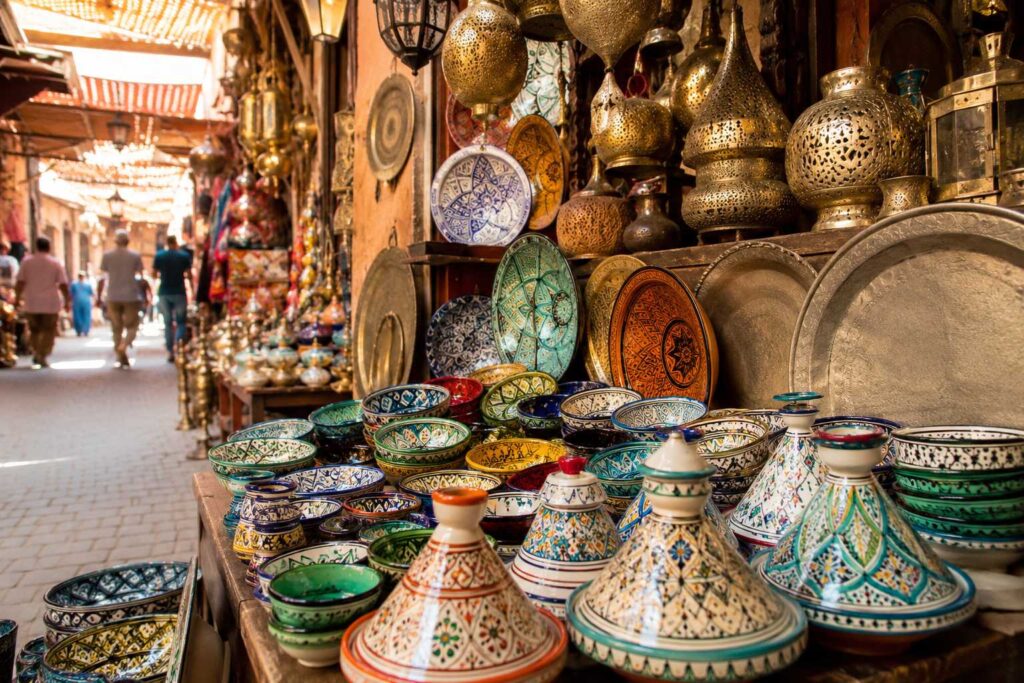
- Handmade pottery
- Leather goods
- Metal lanterns
- Spices and herbs
- Argan oil products
- Handwoven textiles
- Jewelry crafted by local artisans
Many products are still made using traditional techniques passed down through generations. As a result, souks provide a unique opportunity to observe local craftsmanship firsthand.
Cultural Importance of the Moroccan Souk Experience
Beyond commerce, the Moroccan souk experience serves an important cultural function.
For centuries, souks have acted as gathering places where people exchange news, conduct business, and maintain social connections. Markets often reflect the history of their cities and preserve skills that might otherwise disappear.
Walking through a souk allows visitors to observe daily life in a way that museums and monuments cannot fully capture. The sounds of merchants, the scents of spices, and the visual display of handcrafted goods contribute to an environment that remains deeply connected to Moroccan traditions.
Tips for Enjoying the Moroccan Souk Experience
To better appreciate the Moroccan souk experience, visitors should take time to explore slowly and respectfully.
It can be helpful to:
- Carry cash for small purchases.
- Compare products before buying.
- Ask questions about handmade items.
- Respect local customs and photography rules.
- Stay aware of surroundings in crowded areas.
Approaching the market with curiosity rather than urgency often leads to a more rewarding experience.
1. What is the Moroccan souk experience?
The Moroccan souk experience refers to visiting traditional Moroccan markets, especially in medinas, where shops and stalls sell goods such as spices, textiles, leather, pottery, jewelry, and fresh produce.
2. Is bargaining normal in Moroccan souks?
Yes. Bargaining is a normal part of the Moroccan souk experience, especially for handicrafts and decorative items. It is usually seen as a respectful negotiation, not a conflict.
3. How can visitors avoid common mistakes in Moroccan souks?
Visitors should compare prices before buying, carry cash for small purchases, ask questions about handmade products, respect photography rules, and stay aware in crowded areas.
4. Are there guided tours to the Almond Blossom Festival in Morocco?
Yes, many southern Morocco cultural tours and Anti-Atlas road trips include Tafraoute during almond blossom season.
5. Why are Moroccan souks culturally important?
Moroccan souks are important because they are not only shopping places. They are social spaces where people trade, exchange news, preserve craftsmanship, and maintain local traditions.
The Moroccan souk experience is much more than a shopping activity. It reflects centuries of history, craftsmanship, trade, and social interaction that continue to shape everyday life across Morocco. Understanding how these markets operate helps visitors gain a deeper appreciation for local culture while navigating them more confidently.
Have you ever visited a Moroccan souk, or is there a traditional market elsewhere in the world that left a strong impression on you? Share your thoughts in the comments below.
Здесь портале можно отыскать важную информацию.
https://tltrock.ru/material/2026-07-24-ekologichnost-i-materialy-ustoychivyy-podkhod-brenda-premiata-v-proizvodstve-obuvi.html
Здесь немало нужных данных.
https://funblog.breakmoda.ru/58lLQSH7z8Aa/